e-learning essentials
121 Topics- 401Views2likes3Comments
Community Insights: Peer Guide Spotlight
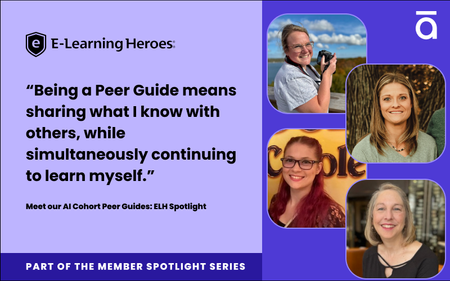
Many of you have seen buzz about our AI Assistant Certification Cohort , regardless if you have participated. Our second run of the program just wrapped up, and it’s safe to say that the biggest difference between these two sessions lies in the hands of four community members. Our peer guides: MelAngiulo SusanWhalen0822 lane_jacole & TaylorSakinsky- What is a peer guide? These are community leaders who help with community programs. Right now those programs are our AI Assistant Certification Cohort and Peer Pods. These initiatives are leveling up the way we learn in ELH by creating bite sized communities of practice. This increases peer to peer connection: they’re opportunities to learn not just with each other, but from each other. As these programs continue to grow we realized they needed one major improvement: peer leadership. That’s where these four community members come in! Their journey to LD varies: from a recent M.S in Instructional Design (congrats Melissa!) to having left teaching middle school after 16 years (an incredible tenure, Jacole!). The path specifically to becoming a peer guide was more straightforward, as they all participated in the first AI cohort. All four guides shared that filling this role was anything but a re-hash of their first experience. Rather, being a peer guide meant a front row seat to the variety, creativity, and possibilities that each participant brought to the assignment. “We all had the same prompt, but it was fascinating to see how many different directions everyone took it in. There were some genuinely creative ideas and modifications that inspired me to try something new in my own work.” - Melissa “It's so fun to see everyone's take on the same task, and it shows just how truly unique we all are! The creativity was inspiring.” - Taylor “I love the different color schemes, the images generated, and the creativity applied to the activity. It truly inspired me!” - Susan “I saw some new ideas that I haven't seen before, and those submissions helped me grow as well!” - Jacole The willingness to experiment with the assignment is just the surface of successful community based learning. Being open to resources, learning from others, sharing pain points (and of course bonding over pet pictures) are all central elements to maximizing the opportunity for personal growth in a learning community. Taylor and Melissa emphasized the diversity of expertise in ELH, reminding us “lean on those around you” and that “we can all leverage and learn from one another.” Jacole pointed out that “sometimes the best learning comes from the workarounds others have found and shared for their similar frustrations.” Susuan corroborated, sharing the reward of this is discovering “shared experiences, from our love of pets to the all-too-familiar challenge of getting AI to generate exactly the image we envision.” Being intentional about openness to growth, to sharing, to learning with and from one another is a huge part of their success as peer guides. Another part is simply the joy of building up others. When asked what being a peer guide meant to them there was a resounding consensus: they wanted to help and connect with the community. “Stepping into the peer guide role gave me the opportunity to build meaningful connections with individuals across the global Articulate community.” -Susan “I wanted to be a witness to the growth and trials of my peers, celebrate the wins no matter how big or small, and commiserate over any pain points.” - Jacole “I thought it would be a great opportunity to help the next group of members navigate their experience.” - Taylor “Being a Peer Guide means sharing what I know with others, while simultaneously continuing to learn myself.” - Melissa And in the spirit of helping others by sharing what they know, each of our peer guides offered some advice: About using AI tools, make sure you check the final product. “As trained professionals, we have the expertise and responsibility to design effective courses—LLMs should be viewed as just another tool in our toolbox, not a replacement for our judgment.” -Susan What this looks like: integrating AI into your workflow means integrating a system of checks you might not have thought about before. The usual read-through for clarity, typos, and other common human errors should be joined by reviewing images, making sure quiz questions match the type of answers available, and keeping a library of prompts that are more effective than others. About ELH, explore the full extent of resources available “There are so many cool features and how-to videos that I wouldn't have known about if I didn't get an email about an "updated features walkthrough" or if I wasn't scrolling through the ELH resources.” -Melissa What this looks like: take advantage of our download library, ask for feedback on builds, and attend webinars whenever possible. Don’t hesitate to search for a keyword or interaction type- the well of knowledge here is deep. “Lean on those around you (and in the ELH community)! All of us come from varying backgrounds with different levels of experience, and none of us knows it all!” - Taylor What this looks like: reach out to your peers, pose questions about best practices, and specify if you think a certain lens will help you that you’re missing. Chances are high someone here has that perspective. About life outlook, stay in a growth mindset “There are always so many ways to grow when you are intentionally open to it.” - Jacole What this looks like: stay alert for opportunities to learn, to revisit things you once knew, and to share what you know now. 🌟Our peer guides are wonderful resources for advice, and we know there are many more in the community who just need the right chance to shine. If this is you, sound off in the comments with what you’d like to bring to the community! It can be an article, a build, or a community leadership position. 💬If you’re not ready for the spotlight, chime in below with what you believe is essential to learning in a community.362Views2likes5CommentsHow I Built This: I Developed an Award-Winning Ethics Course
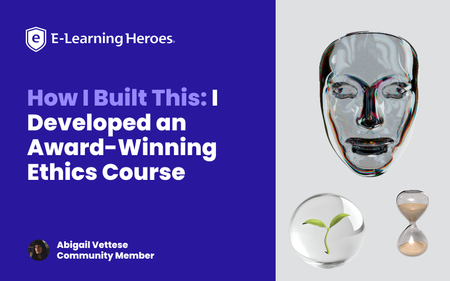
Why I Built This: When I first learned about branching scenarios, something clicked for me that I hadn’t seen other eLearning developers execute: visually compelling, philosophically rich thought experiments. I studied Moral Philosophy in my undergrad and became obsessed with ethical dilemmas. Naturally, I decided to build an ethics course about technology. Think The Trolley Problem, only I wanted to pose questions about the growing reliance on AI and its implications by employing Instructional Design strategies. An opportunity came up through my Master’s program to attend DevLearn and compete in DemoFest, so it was time to start building my concept. I designed and developed a course in Storyline called The Agency Algorithm that confronts learners with issues regarding three main topics: algorithmic warfare (The Armory), AI assisted resource allocation (The Triage Garden), and surveillance (The Mask Archive). The Experience & Design Intent: A quick walkthrough of the multi-room experience. The Agency Algorithm is a multi-room interactive learning experience that blends instructional design, game-like mechanics, and philosophical inquiry. It immerses learners in ethically complex scenarios by leveraging branching logic, and integrating experiential aesthetics with conceptual depth. My primary goal with this project was to encourage critical reflection on the role of technology on human agency and autonomous choice. The concept itself was pretty clear to me, but I wanted to push the limits of Storyline visually, so I acquired a number of 3D assets from Adobe Stock, some of which I further modified in Adobe Dimension. I wanted the visuals to anchor the learner in a unique environment that did not feel reminiscent of traditional eLearning, and rather create space to explore and feel like a participant in something unfolding. There aren’t often black and white answers to ethical questions, and branching scenarios are an excellent way to illustrate this while offering learners a safe place to experiment and think through various outcomes based on their decision making. Visual Worldbuilding/Making It Not Feel Like eLearning: Initially, I intended to hand draw assets myself to really hone in on the human vs AI dynamic, but quickly realized the time I’d have to accomplish this was dwindling. While I drafted a few loose concepts in my journal, I ultimately decided to stick with digital assets. While I landed on 3D assets largely due to time constraints, the outcome is reminiscent of an old experimental video game or some sort of immersive idea gallery. As an artist, I often approach my work from a minimalist lens so this project was a fun way to really add some artistry that corporate training often doesn’t have room for. Variables, Multi-state objects, Cue points, and other mechanics: I relied heavily on multi-state objects to create hover states, “tip” cards, text labels, and more, for example in the circuits with definition reveals. I enjoyed building the “loading” effect in the Mask Archive, although it was a bit clunky and took a lot of trial and error! I learned a lot along the way and used a cue point on an orb with a glow effect beneath the mask and used triggers to cause the effect to work. The course overall has a few hundred triggers (slide, object, and variable triggers) and somewhere around 40 variables (mostly T/F variables). What I learned: I think it is important that we don’t hand-hold learners through every learning experience. I want users to think through complex challenges and autonomously choose and feel like a true agent in the process of acquiring knowledge. A lot of eLearning makes it too easy for the learner and we lose engagement when we undermine the intelligence of our audience. I learned SO much about how to leverage Storyline in new ways. I am still a relatively new user to the tool, so this project allowed me to freely explore and be guided by curiosity. Link to my portfolio: https://www.abigailvettese.com/1.4KViews12likes7CommentsIn Case You Missed It: November 2025 in ELH
Here’s a brief highlight reel of the conversations, builds, and resources that shaped the community’s discussions in November. 🧳 Join the E-Learning Heroes Passport Challenge! From now through January 5, you can earn passport “stamps” (aka badges!) just for participating in the community—posting discussions, sharing examples, cheering on peers, and more. Every badge marks progress in your own learning journey and gets you closer to fun rewards like swag, shout-outs, and even a chance to win a Fujifilm Instax camera. 💬 What Everyone’s Talking About Looking for a spark of inspiration? Here are some conversations fueling creativity across the community. Instant Publishing with Quick Share Members are excited about Quick Share’s one-click publishing for everyday Rise content. See how others are using it for job aids, previews, and vendor training, and share your own quick-use ideas. Share Your AI Assistant Makeover Creators are posting fun before-and-after examples of how they used AI Assistant to level up drafts, build scenarios, or refine lessons. Check out their transformations and add your own. A Handy Storyline Notepad JoeDey's persistent notepad for Storyline is getting lots of love. If you’ve been looking for a simple way for learners to save notes, explore the demo and join the discussion. 🌟 Standout Challenge Entries November’s challenges surfaced lots of gems! A few standouts: Using Interactive Video for Scenarios & Quizzes in E-Learning Push vs Pull E-Learning By Jayashree_Ravi A side-by-side look at how the same topic can feel totally different: passive slide vs. active video journey. The branching version turns a basic onboarding moment into an experience you are excited to explore. Train Smart: Technique Quiz By ElenaZhuravleva This first-time challenge entry uses short workout clips as quiz questions to test whether you can spot proper form. Simple, practical, and a great example of how video can make quick checks feel interactive. Designing Office Exploration Interactions for E-Learning Welcome to the Office By Kate_Golomshtok This creative virtual tour guides you through an office space, offering a way to explore rooms, teammates, and key info. A fun, game-like approach with lots of potential for expansion. You're Hired! By ded2 This demo brings an interactive approach to onboarding with AI-powered characters who respond in real time. Airport Security for Travelers The Zero-Drama Security Shuffle By GabrielleBradle See how AI Assistant took an outline and shaped the result into a clean Air Travel Security module. A great example of AI speeding up real course development. TSA Dishes on Thanksgiving Food By GolfPrincess This demo experiments with AI-generated visuals, narration, and custom interactions to build a playful learner experience. 🎤 Members Took the Mic (Guest Webinars) From beginner tips to polished animations, these guest-led sessions offer hands-on tips you can put to work in your next Storyline build. Top 10 Tips for New Storyline Users with Judy Nollet New to Storyline? Learn ten essential tips to help you skip the rookie mistakes and start building with confidence. Creating Animations and Interactions in Storyline with Simple CSS and JavaScript (No Coding Required) with Natalia Vostretsova Learn how to give your Storyline projects a modern, animated feel using a simple framework and copy-ready code. 🎓 Trending Training Webinar November’s training focused on improving visuals with tools you already have. Edit AI Images Using Free Windows Tools Discover simple, free ways to edit AI images on your Windows PC, from removing backgrounds to polishing photos and refining illustrations. 📚 Member-Powered Articles Looking for inspiration? These member-powered reads offer hands-on techniques, career insights, and behind-the-scenes workflows you can adapt to your own projects. Made By Members: Rise Code Blocks See how community members are transforming Rise 360’s Code Block into full-on games, tools, and simulations. Community Insights: What You Can Learn from Career Pivot Discover practical career lessons from David Tait’s journey—from leveraging your existing strengths to turning setbacks into opportunities you can use in your own development. How I Built This: How I Vibe-Coded a People Manager Simulation by Daniel-Benton. A practical walkthrough showing how a story-driven simulation was created in Rise, and how you can adapt the same codebase to build your own interactive experiences. 💎 Hidden Gems Sometimes the best tips are hidden in plain sight. Here are a couple worth exploring: Articuland 2026 is Coming! Join the Articuland 2026 VIP list for early updates and pricing, then share the topics and ideas you want featured as we design next year’s experience together. Come Say Hello in the Welcome Center New members are introducing themselves every day, and a quick hello goes a long way. Jump in, say hi, and help someone feel at home. (Bonus: replying earns you a Passport Challenge badge through January 5!) ✨ That’s a wrap for November! What’s one thing you discovered—or created—recently that we should feature in the next roundup? Share it below!499Views1like0CommentsFree Webinar: Secrets to 95% Safety Training Satisfaction
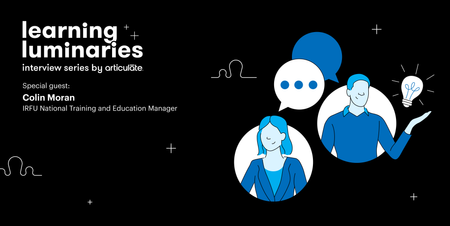
It’s here, it’s free, and now, it’s on demand! Our best-of webinar replay is here: Discover how a leader in safety training achieved 95% learner satisfaction and adeptly handles shifting compliance needs. We think you’ll love this guest’s tips for getting real results with e-learning. About the guest: Irish Rugby Football Union This fan-favorite interview features Colin Moran, National Training and Education Manager at the Irish Rugby Football Union (IRFU). The IRFU is the national governing body for rugby in Ireland. Colin’s team creates training for hundreds of teams across the country. Their learning audience includes everyone from elite and recreational athletes to volunteers, medics, coaches, and referees. Managing such a diverse audience makes it challenging to ensure that training is relevant and engaging for all. Learning Luminaries: On-demand webinar In this webinar, you can expect to learn how the IRFU training team reduces administrative work and adapts their training to different learner needs. You’ll also discover: Why and how the IRFU got stakeholder buy-in to transform their paper- and slide-based training into interactive e-learning. Online training tips and tools the IRFU uses to quickly deliver vital regulatory updates to game staff, volunteers, and players. A needs-based, learner-centered approach to training design that’s led to 95% learner satisfaction. You’ll also get a sneak peek of a microlearning course Colin’s team created to prevent head injuries and quickly respond to regulatory changes. Ready to tackle your training challenges and get inspiration from a fellow e-learning pro? Watch the free on-demand webinar here.616Views0likes0Comments3 Steps for Creating Your First Rise 360 Course
Everything you need to create modern, engaging e-learning is at your fingertips with Rise 360. Not sure where to start? This handy guide will help you create your very first microlearning or full-length course in three easy steps. Let’s get started! 1. Choose the type of learning experience you want to create: microlearning or a full-length course Start by choosing whether you want microlearning or a full-length course. Your choice will depend on the content you want to share with learners. Microlearning courses aren’t just short courses. They’re bite-size pieces of content focused on a single learning objective. They’re approachable, bingeable, and easy for users to review and apply. Microlearning courses are also great for learners on the go because they’re easy to consume on phones or tablets. Full-length courses give you the opportunity to go in-depth on a certain topic. Made up of multiple lessons and knowledge checks, courses may include multiple learning objectives and, as a result, take longer for the learner to experience. Learners almost always use a computer to access full-length courses. So how do you know which format to use for your course? When choosing between the two, ask yourself: How many learning objectives do I have? If you only have one, a microlearning course is the clear option. If you have more than one, could each one stand alone or are they interdependent? If they could be split up, you could create a series of microlearning courses. If they’re interdependent, then a full-length course is the best option. Once you’ve made your decision, go to your Rise 360 dashboard. Click Create New and choose Course or Microlearning. 2. Search for a template or start from scratch It's always a good idea to look at templates and see if there’s already material you can use or adapt to your learning objectives. Articulate offers two types of templates: placeholder and real content: Placeholder templates include guidance and ideas to help you create a fully customized course. Real content templates have pre-written content you can adapt to fit your learning objectives. After choosing the type of e-learning you’d like to develop, you’ll see all available templates. Select Preview to explore a template before you choose it. You can use the search bar to find templates by keyword. And for full-length courses, you can use the left-hand panel to explore templates by category. When you’re ready to use a template, click Select This Course. If you don’t find exactly what you need, don’t worry: You can always customize a template or even start from scratch. Just click +Blank Course/Microlearning to begin. 3. Add your content Once you’ve chosen a template or started from scratch, you can add in your content using blocks. Blocks give you different ways of formatting your content in a lesson or microlesson. There are many types of blocks: text blocks, image blocks, interactive blocks, knowledge check blocks, and more. You can use different block types to make your content unique and engaging. Clicking All Blocks or the + sign in your lesson or microlesson will open a list of block types in a left-hand panel. If you change your mind about the type of block, you can easily choose a different block from the same category by clicking the dropdown menu in the top-left corner of the block. For example, the paragraph block gives you the option of reformatting your content into different types of paragraphs, headings, statements, and a note. Not sure how to pick the right block? Think about what your learner needs. For example, if you have a lot of content that may be overwhelming as a text block, consider using a tabs block to break up the text. Or, if you want learners to compare and contrast different chunks of information, consider using an accordion or flashcard block. As the course author, this is your opportunity to get creative! Here are some articles for inspiration: 6 Rise 360 Blocks to Use Instead of Bullet Points 7 Creative Ways to Use Images in Rise 360 Courses 6 Rise 360 Block Types to Use to Compare and Contrast Concepts 5 Different Ways to Create Scenarios in Rise 360 3 Creative Ways to Incorporate Your Logo into a Rise 360 Course More Resources Creating microlearning or full-length courses in Rise 360 is superfast and easy. In just three steps, you’ve already started putting together an elegant course customized for your learners. And when you’re done drafting your course, you can share and review your content with stakeholders easily thanks to Review 360. Here’s more information on how to use Review 360: Getting Started with Review 360 Rise 360: Publish Content to Review 360 Your Most Asked Review 360 Questions Once they’ve been approved, you can easily publish from your Articulate 360 dashboard. Here are some guides to get you started: Rise 360: Share Content with Learners How to Share E-Learning Courses with Learners Want to try creating your first course in Rise 360, but don’t have Articulate 360? Start a free 30-day trial. And subscribe to our newsletter to stay up-to-date on the latest e-learning examples.3.2KViews0likes3Comments6 Free Resources To Jump-Start Learning About Disabilities in Your Org
According to the World Health Organization, 16% of the global population lives with a significant disability today—and that number is growing. This means that you’re likely to work with people who have disabilities, if not experience a disability yourself. Learning and development professionals have the chance to offer training that unifies teams around the subject of disability—and if you haven’t started these discussions already, Disability Pride Month marks a great time to begin. New and updated microlearning courses and templates can give you a head start on developing nuanced, inclusive learning opportunities. Keep reading to explore what’s available and how you can customize it for your teams. How To Request Disability Accommodations at Work (Microlearning Course) Live Preview of Disability Accommodations Template Asking for help can be overwhelming. Give employees the tools they need to get the conversation started with managers by providing them with this helpful microlearning course that covers their rights and reviews common reasonable accommodations. Invisible Disabilities in the Workplace: Kentay’s Story (Microlearning Course) Live Preview of Invisible Disabilities Template Guide learners through realistic workplace conflicts around disability with this story-driven microlearning centered around Kentay, who’s considering disclosing his invisible disability to his boss after a few mistakes at work. A Quick Guide To Talking About Disabilities (Microlearning Course) Live Preview of Talking About Disabilities Template Teach learners how to keep their workplace discussions about disability respectful and walk them through the answers to some common questions like: What defines a disability? What makes a disability “visible” or “invisible”? How do you talk about someone else’s disability? How To Identify and Stop Using Ableist Language (Microlearning Course) Live Preview of Ableist Language Template Even well-intentioned people can fall prey to ableism if they don’t consider the impact of their words. Use this microlearning to help learners improve their ability to identify and avoid ableist language. ADA Compliance for Employees and Managers (Placeholder Templates) Live Preview of ADA Compliance for Employees Template Live Preview of ADA Compliance for Managers Template The Americans with Disabilities Act outlines rules and regulations concerning the treatment of workers with disabilities. Compliance with the ADA is legally required and helps organizations ensure their policies are inclusive. Employees must understand ADA compliance–and that’s where these templates can help. You can use them to give your teams an overview of what the ADA says and outline your organization’s approach to ADA compliance. One template can help you develop a course for all employees, and the other includes specific information for managers. In both, customizable sections give you a chance to share specific, personal examples of how your organization supports people of all abilities. Wrap-Up A healthy, productive workplace requires teams to understand how to approach the topic of disability with respect and compassion. These easy-to-use prebuilt templates provide an ideal starting point. Sharing these microlearning courses and templates with your team is easy. Just go to your Rise 360 dashboard, click the Create New button, select Course or Microlearning, and search for the desired template. And if you’re looking for more soft skills training for your teams, you can find that in your Rise 360 dashboard as well. Here are some topics to get you started: Health and Wellness, including mental health in the workplace and dealing with difficult emotions or life events. Communication, including writing well, verbal communication, and communicating with empathy. Organizational Culture, including strategies for inclusive communication. Want to use and customize these templates, but don’t have Rise 360? Start a free 30-day trial. And subscribe to our newsletter to get the latest templates, product updates, e-learning examples, and expert advice sent directly to your inbox. If you have questions, please share them in the comments.301Views1like1Comment5 Mental Health Resources You Can Share With Your Learners Today
Did you know that May is Mental Health Awareness Month? Individuals aren’t the only ones impacted by mental health challenges—businesses can feel the effects, too. Polling from Gallup indicates that employees with mental health challenges miss four times more work than those who rate their mental health positively. This lost productivity costs the economy some $47.6 billion annually. As an e-learning designer, you can help employees feel supported by providing resources that raise awareness of the importance of mental health and outline helpful tips for improving it. If you’re an Articulate 360 subscriber or trialer, you can get the ball rolling quickly by using the ready-to-use mental health training materials in Rise 360—just in time for Mental Health Awareness Month. Curious what’s available? Check out some of the new releases below. You can learn how to customize these templates for your own company and training needs at the end of this article. 1. Stress Busters Microlearning Course Encourage employees to feel more relaxed with the 9 Simple Stress Busters You Can Do Today microlearning course. Moving through this quick learning exercise reveals proven strategies for relieving stress and activating feel-good endorphins. 2. Breathing Exercises Microlearning Course Anyone feeling tense can benefit from the Melt Away Stress With a 3-Minute Breathing Exercise microlearning course. With each successive swipe through a guided breathing exercise and accompanying graphics, learners will feel more peaceful and serene. 3. Feel Your Feelings Microlearning Course Reinforce the message that it’s OK not to be OK with the Feel Your Feelings microlearning course. This quick activity helps people process difficult emotions by prompting them to name and explore their feelings from a place of compassion and understanding. 4. Get Grounded Microlearning Course Support employees through worry spirals and mental fog with the Escape Anxiety With a 5-Minute Grounding Practice microlearning course. Moving through this 5-minute practice roots learners in the here and now as they engage their senses of taste, touch, smell, sight, and hearing. 5. Day-by-Day Challenge Course To offer access to a more in-depth daily challenge, check out the 5-Day Challenge To Improve Mental Health course. Each day, learners can refer to this course, explore a different facet of mental health, and follow simple exercises for putting concepts into practice. Wrap-Up Providing mental health resources as part of your business training is a win-win. Employees have access to support at work, and businesses benefit from employees who are less stressed and anxious. The examples above can help you get started, but the sky’s the limit for how you can use Articulate’s creator tools to achieve your business training objectives. Interested in sharing one of the supportive resources with your team? If you’re an Articulate 360 subscriber or trialer, you can access and edit all the examples linked throughout this post directly from your Rise 360 dashboard. Simply click Create New, choose Microlearning and select the template you want to use, as shown in the video below: Looking for even more ready-to-use, customizable mental health content? You'll find those in your Rise 360 dashboard too. Just click Create New, choose Course, and then select Mix & Match Lessons. Here are some relevant topic categories to check out: Stress Management: covers stress management fundamentals, stress and work performance, and strategies to relieve stress. Health and Wellness: includes dealing with difficult emotions and life events, exercise, forming healthy habits, mental health awareness in the workplace, positive psychology fundamentals, and positive psychology in the workplace. Resilience: features content on resilience fundamentals, building career resilience, leadership and resilience, emotional and physical resilience, and thriving through challenges. Be sure to also follow us on Twitter and LinkedIn and come back to E-Learning Heroes for more advice on everything related to e-learning. If you have any questions, please share them in the comments.959Views0likes8Comments8 Business Use Cases for Microlearning
Are you excited to try out microlearning, but unsure when to use it? Below, we outline eight common workplace situations that benefit from a short-form course. Each situation includes a sample microlearning. At the end, learn how you can customize these templates for your own company and training needs. 1. Create Organizational Alignment To hit a business target, everyone needs to be moving in the same direction. Creating that alignment starts with clear, frequent communication of the shared mission, vision, and values. Microlearning can help. The following editable template shows how you can align employees through regular executive “micro” updates: Executive Update 2. Highlight HR Information, Notices, or Reminders Educating employees about annual events like open enrollment, tax season, and compliance training is a critical function of HR teams. The problem? Important announcements often get missed when they’re embedded in long paragraphs or endless emails. Grab the following templates to see how microlearning makes HR communications more digestible and engaging: A Quick Guide To Open Enrollment Internal Company Newsletter 3. Strengthen Company Culture and DEI Initiatives Fostering an inclusive company culture is a continuous process—not a one-time effort. A series of microlearnings can support your larger culture-building and DEI efforts. Check out the following examples for ideas on how to get started: Are You an Ally? Try Taking on These 5 Roles How To Identify and Stop Using Ableist Language Gossip-Proof Your Workplace 4. Streamline Business Processes You can also use microlearning to document and streamline business processes or workflows—such as employee onboarding or performance management. Notice how the following examples make it easy for employees to work through the steps of a process independently: New Hire Pre-Hire Checklist Performance Review and Feedback 5. Increase Security Awareness Most successful data breaches, phishing attacks, and other cybersecurity incidents are caused by human error. Adding refresher microlearnings throughout the year can fortify your defenses. See an example for safeguarding against phishing attacks below: Spot the Phish 6. Enhance Employee Wellness A successful business needs thriving employees. But employee wellness training often ends up buried under competing priorities. Microlearning makes it easy for employees to fit in short breaks for self-care throughout the workday. Check out these two wellness-related microlearning examples: 3 Desk Stretches to Instantly Improve Your Day 5 Tips for Better Naps 7. Provide Quick-Reference Guides Microlearning is the perfect resource for one-off training questions: Employees can quickly find the answers they need—when they need them. Below, we’ve created templates for product and software training. But you could easily create quick-reference guides for sales, customer service, and other teams. Get To Know [Name of Product] Software Training 8. Reinforce and Assess Key Takeaways Finally, who says you have to choose between a more sizable course and microlearning? Repetition aids retention. Consider following up longer training sessions with a microlearning quiz, scenario, or summary. The examples listed below demonstrate how you might do this: Can You Recover From a Workplace Mistake? Training Refresher Wrap-Up There’s no shortage of creative ways you can use microlearning to achieve your business training objectives. The examples above are just a starter list. You might also check out submissions to one of our weekly community challenges, 40+ Microlearning Examples Created in Rise 360 #407. Interested in customizing one of these examples for your team? If you’re an Articulate 360 subscriber or trialer, you can edit all of the examples linked throughout this post by choosing the course from our Rise 360 microlearning content templates. Here’s a short video showing how to do that: What’s the latest microlearning course you’ve created? Tell us about it in the comments—and feel free to ask any questions you might have! Like this article? Subscribe to our newsletter to get the latest e-learning inspiration and insights directly in your inbox. You can also find us on LinkedIn and Twitter.4.4KViews0likes11Comments