instructional design
167 TopicsTranslate Freely with Articulate Localization—No Sign-Up Needed
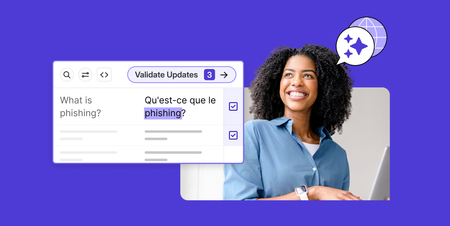
If you work with a global audience, you’ve likely run into the time consuming task of translating content. Even if you haven’t had to translate a course yourself, you’ve almost certainly heard how time, energy, and knowledge intensive the process is. Add in needing to shift things for regional context? You may as well ask for the moon. Fortunately for the stars of e-learning, Articulate Localization is now available to all users! There is no sign-up required. Users can instantly translate content and share it directly with language validators within Rise and only pay when you are ready to publish. You no longer have to hope someone will understand the difference between a work function and a party, or has the time to correct every instance a translation tool replaces “logged in” with something about timber. 🌍No Global Audience? One in five people in the United States, and nearly half of Canada is multilingual. The chances of your audience benefiting from localization is significant, and goes up with every new learner. Still not sure if localizing your course is the right decision? Check out this article with three simple questions to help. You can also review our recent case study about Global-First approaches. “If you have one course in multiple languages, it means you are connecting people even inside your own corporation.” 🔎The Details How to Get Started and What is the Cost? Getting started with Articulate Localization is simple: you can instantly access it within Rise without any required sign-up! While localization typically begins at $5,000 per year, we strongly encourage you to contact our sales team for pricing customized to your specific needs. Need help with buy in? Don’t just take our word for it. Customer case studies show the ease, utility, and advantages of localization in action. 👟Get started localizing your courses today! Log into Articulate to get instant access to Localization. Start an Articulate 360 trial to try Localization—no credit card required.347Views2likes0CommentsCommunity Insights: How Support Takes You Far
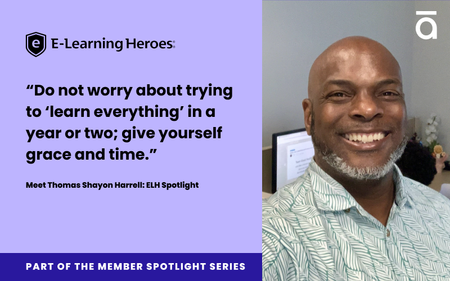
If you’ve spent time checking comments, posting examples, or asking questions in the ELH community it’s likely you’ve seen Thomas_Shayon offering advice and encouragement. This Member Spotlight highlights how Thomas’s career journey was buoyed by support, and how he pays it forward now. Given a chance Like many people in learning design, Thomas did not start out in a training role. His first opportunity to teach was while he worked as a project manager on a quality assurance team for a small auto insurance company. As many roles do, this expanded until he was teaching independent insurance agents about how to position their products to their ideal customer. This “short stint” was laying the groundwork for what would turn into a 20 year career in corporate learning ranging from nonprofits to technical training and more. Making a difference In another early training position Thomas found “great pride and joy” in what his non-profit team built and delivered to “support some of the most vulnerable folks” in his community. This ability to make a meaningful difference in the lives of those around him (kids aging out of foster care) solidified his love of teaching, and led to the next defining element of his career: receiving that support back. Senior leaders, executives, and other coworkers were crucial to Thomas’s growth, showing “what leading with your heart” truly looked like. “When I spoke, my ideas were heard, and several were implemented. When I gave critical feedback, they were humble and listened,” he shares. In addition to the interpersonal support various senior leaders offered, some also created critical opportunities for Thomas. Opportunities like regularly attending executive business strategy meetings, allowing him to weigh in on how KPI’s could be achieved with L&D initiatives, and otherwise being “empowered to do my best work ever.” The mindset The culmination of these experiences has led to a specific mindset that Thomas takes into his everyday - not exclusive to learning design, but wholly integrated in his life. The core elements are: Discover what you enjoy doing Thomas’s answer is, of course, “helping others evolve into the most excellent version of themselves at work and at home” Learn as you go “I am not a technically trained instructional designer. However, over time, I’ve read, taken online courses, earned certifications, and so on to develop the ID-specific skills needed to do the work. Do not worry about trying to “learn everything” in a year or two; give yourself grace and time.” Doubt is a monster we carry with us “Learn and embrace it sooner than later, doubt is a part of the journey; everyone deals with it. Uncouple who you are from the work that you do.” You are enough “Navigate your life and career with that fact neatly tucked into your spirit and move boldly in your life.” Paying it forward True to the people who helped shape this mindset, Thomas now offers encouragement, advice, and other support everywhere else he goes. Leading from the heart can be seen scattered across our own community: from welcoming new members, offering insight on best practices, or sharing professional examples. He’s filled the role of Peer Guide with flying colors, and ELH is made better for the care Thomas brings to our community. I’m sure his learners feel the same way. In that spirit: leave a comment below tagging someone who has helped support you, and how you can pay it forward by reviewing a project, offering advice, or welcoming someone new.358Views8likes5CommentsMade by Members: On-boarding New Team Members
This month we’re spotlighting submissions across several eLearning Challenges that, when combined together, make an onboarding experience. These examples show how a variety of techniques can create memorable and easily referenced guides to simplify the fire hose of information that accompanies onboarding. Mix and match these examples for your specific use case if you’d like to give it a try, and be sure to comment below with what inspired you! A Blueprint for Day One and Beyond by SMcNicol Designed as a leave behind for after an interview, this course shows not only what an interviewee could use as a pitch for their first months in a job, but a clean and organized method for general 30/60/90 day plans. 💡Inspiration to take: How to use what Shannon describes as an “AI assisted workflow” to tailor plans and content Layered descriptions of not only what a process looks like, but concrete tactics for success Who is behind the scenes? By Kate_Golomshtok A bright example of vector image use, this submission shows a quick and memorable way to introduce different team roles. This approach makes it easy to understand the division of responsibilities in complex teams or projects. 💡Inspiration to take: Vector images that clarify tool use and positions for projects that could be confusing at first glance An “insider” approach to content presentation that includes field specific lingo Data Security Training by BrilliantTeams Submitted as part of the accordion interaction challenge, this submission shows how to make compliance training into an easily referenceable tool. New team members can easily dig down into more detail, while keeping high level information such as common initialisms above the fold. 💡Inspiration to take: Compliance training is notoriously a slog, so use engaging interactions to break up detail heavy content Stack information with the rationale behind it to help contextualize the “why” of procedures Meet the Team by AsweniGD Just what it says on the tin, this team introduction is a new team members’ dream for understanding organizational flow, titles, and personalities. Between the color coded org chart and detail on responsibilities this would help new hires understand who to ask what, when. 💡Inspiration to take: The morph transition makes for a clean transition from contextualized visuals to greater detail information Embrace color coded visuals to leave more room for what Ash describes as “human centered” introductions 🏅 Want to Be Featured Next? We’re always looking to highlight inspiring examples from the community, and your work could be next! Here's what we look for in a standout submission: A downloadable .story file or link to your Rise course so others can explore, adapt, and learn from your build. A clear explanation of what you built, how it works, and what makes it unique. Behind-the-scenes insight into your process, techniques, tools, or challenges you tackled. Purposeful design, whether it’s solving a problem, teaching a concept, or experimenting with a new approach. Bonus: Share your ideas for how your design is widely applicable beyond the specific example. Got something cool to share? Post it in Share Examples, and you might see it featured in an upcoming roundup!657Views1like0Comments🌍 Around the World with Articuland
The journey continues! ✨ Articuland 2026 is crossing borders and connecting learning professionals around the globe. Last week, our community put on their detective hats to uncover where Articuland was headed next, and you cracked the case! 🕵️♀️🎉 ✨The winners of the 20% discount are: katherinezf AmyDorries-0d78 Isabella_M AlistairBruce KevinThorn GingerBakerSanh JoanneChen taylabm and easye5116 🏆Our Grand Prize winner is ChristineWal590 Special shout-out to GingerBakerSanh for correctly identifying all three stops! Each winner will be getting an email with more information shortly. So without further suspense… 🌏 Articuland 2026 is headed to: London • Barcelona • Toronto 📍 Event Details 🇬🇧 London, UK 🗓️ Wednesday, October 14 & Thursday, October 15 📍 Novotel London West 🇪🇸 Barcelona, Spain 🗓️ Friday, October 16 📍 PRBB – Parc Recerca Biomèdica Barcelona 🇨🇦 Toronto, Canada 🗓️ Tuesday, October 27 📍 Hotel X 🎟️ Registration is officially open! VIP pricing is available for a limited time. This is the lowest price you’ll get for Articuland 2026 and is only available through May 31, 2026. Articuland is all about practical learning, meaningful connections, and ideas you can actually use. Past events have featured powerful insights from the Articulate team and community voices alike. While we’re still shaping the 2026 agenda, you can expect the same energy, creativity, and impact. ➡️ Register now to secure your spot 💬 Let’s keep the conversation going: What would you love to see at Articuland 2026 – sessions, speakers, formats, or experiences? Drop your ideas below 👇667Views2likes2CommentsHow I Built This: I Developed an Award-Winning Ethics Course
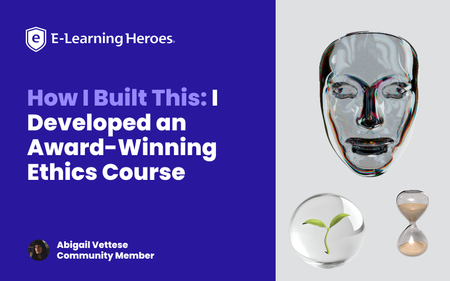
Why I Built This: When I first learned about branching scenarios, something clicked for me that I hadn’t seen other eLearning developers execute: visually compelling, philosophically rich thought experiments. I studied Moral Philosophy in my undergrad and became obsessed with ethical dilemmas. Naturally, I decided to build an ethics course about technology. Think The Trolley Problem, only I wanted to pose questions about the growing reliance on AI and its implications by employing Instructional Design strategies. An opportunity came up through my Master’s program to attend DevLearn and compete in DemoFest, so it was time to start building my concept. I designed and developed a course in Storyline called The Agency Algorithm that confronts learners with issues regarding three main topics: algorithmic warfare (The Armory), AI assisted resource allocation (The Triage Garden), and surveillance (The Mask Archive). The Experience & Design Intent: A quick walkthrough of the multi-room experience. The Agency Algorithm is a multi-room interactive learning experience that blends instructional design, game-like mechanics, and philosophical inquiry. It immerses learners in ethically complex scenarios by leveraging branching logic, and integrating experiential aesthetics with conceptual depth. My primary goal with this project was to encourage critical reflection on the role of technology on human agency and autonomous choice. The concept itself was pretty clear to me, but I wanted to push the limits of Storyline visually, so I acquired a number of 3D assets from Adobe Stock, some of which I further modified in Adobe Dimension. I wanted the visuals to anchor the learner in a unique environment that did not feel reminiscent of traditional eLearning, and rather create space to explore and feel like a participant in something unfolding. There aren’t often black and white answers to ethical questions, and branching scenarios are an excellent way to illustrate this while offering learners a safe place to experiment and think through various outcomes based on their decision making. Visual Worldbuilding/Making It Not Feel Like eLearning: Initially, I intended to hand draw assets myself to really hone in on the human vs AI dynamic, but quickly realized the time I’d have to accomplish this was dwindling. While I drafted a few loose concepts in my journal, I ultimately decided to stick with digital assets. While I landed on 3D assets largely due to time constraints, the outcome is reminiscent of an old experimental video game or some sort of immersive idea gallery. As an artist, I often approach my work from a minimalist lens so this project was a fun way to really add some artistry that corporate training often doesn’t have room for. Variables, Multi-state objects, Cue points, and other mechanics: I relied heavily on multi-state objects to create hover states, “tip” cards, text labels, and more, for example in the circuits with definition reveals. I enjoyed building the “loading” effect in the Mask Archive, although it was a bit clunky and took a lot of trial and error! I learned a lot along the way and used a cue point on an orb with a glow effect beneath the mask and used triggers to cause the effect to work. The course overall has a few hundred triggers (slide, object, and variable triggers) and somewhere around 40 variables (mostly T/F variables). What I learned: I think it is important that we don’t hand-hold learners through every learning experience. I want users to think through complex challenges and autonomously choose and feel like a true agent in the process of acquiring knowledge. A lot of eLearning makes it too easy for the learner and we lose engagement when we undermine the intelligence of our audience. I learned SO much about how to leverage Storyline in new ways. I am still a relatively new user to the tool, so this project allowed me to freely explore and be guided by curiosity. Link to my portfolio: https://www.abigailvettese.com/1.4KViews12likes7CommentsCommunity Insights: What You Can Learn from David Tait’s Career Pivot
One of the best things about creative careers is how flexible they are—you can take them in so many directions. For DavidTait, that flexibility led from graphic design to learning design, and eventually to co-founding 4pt, a learning design studio. 4pt has been creating meaningful learning experiences for more than 16 years. In this Member Spotlight, you'll discover how adaptability, curiosity, and community shaped David's journey, and how to apply these lessons to your own career path. From Design to Learning “Before starting my career in e-learning, I was a student focused on design,” David says. “I spent four years studying design. Two in graphic design and two in newspaper, magazine, and infographic design. That background gave me a strong foundation in visual communication, which has been incredibly useful in my learning and development (L&D) work.” While still in college, he took on a freelance project as a graphical user interface designer for the Northern College Network. “It was my first real step into the world of digital learning design,” he recalls. “It helped me see how I could apply my design skills in a completely different context.” Soon after, a former lecturer offered him a role at an e-learning startup creating online CPD courses for healthcare professionals. “Working in a startup meant wearing many hats,” David says. “That experience really shaped my path and helped me see how my design skills could grow into a career in learning.” 💡Tip: Apply your existing creative skills to a small digital learning project (freelance, volunteer, or self-initiated). Hands-on experience helps bridge design and instructional work faster than theory alone. Turning Change into Opportunity A few years later, the company was acquired, and layoffs followed. “Rather than seeing it as a setback, my studio manager and I took it as an opportunity,” David says. “When we started 4pt, all of those responsibilities suddenly became our job. Being able to adapt to new challenges was essential, and it’s a big reason why we’ve been able to thrive.” 💡Tip: When your path shifts unexpectedly, use it to test new skills or partnerships. Career detours often reveal strengths you wouldn’t discover in a stable role. Finding Flexibility with Storyline “One project in 2013 really shaped our company,” David says. “A client asked us to build a course in Storyline 1. We’d never used it before, but rather than turn the work away, we invested in licenses and learned as we went.” “Before long, Storyline became the tool most of our clients wanted to use,” he explains. “Storyline gave us the ability to solve problems ourselves, experiment more freely, and move much faster. That agility has stayed with us ever since—it’s a core part of how we approach learning design.” 💡Tip: Don’t wait to feel like an expert. Pick a project, open the tool, and build. Use the community forums and shared files when you hit roadblocks. The Power of Community “I’ve lost count of how many times I’ve hit a dead end in Storyline and found the solution on the forums,” David says. “That support has saved me countless hours and kept projects moving. The community around Articulate is unlike anything else.” Over time, helping others became just as rewarding. “Being part of E-Learning Heroes isn’t just about getting help,” he adds. “It’s about giving back. I try to pay it forward when I can, and that sense of community has been such a valuable part of my journey.” 💡Tip: When you find an answer in ELH, take a minute to thank the poster—or add your own version of the solution. Small interactions build visibility and confidence. Lessons from the Journey “Figure out where your limitations are, and then build a trusted network of professionals who can help you overcome them,” David says. “Continuous learning is important, but you don’t have to master everything yourself.” He also believes in stepping outside your comfort zone: “Sometimes doing that sooner opens doors you didn’t even realize were there.” “I try to focus on projects where I can see real value and impact—and to work with people I genuinely like and respect. That combination has made the journey far more meaningful.” 💡Tip: Find one collaborator who complements your skills—a developer, writer, or media pro—and trade knowledge. Collaboration accelerates growth and keeps learning fun. Looking Ahead These days, David is focused on advancing localization in his projects and exploring how AI fits into e-learning. “We’re evaluating Storyline’s new localization features ahead of a major project,” David says. “I’m excited to see how these tools evolve and how we can integrate them to deliver even better multilingual learning experiences.” He’s also reading Co-Intelligence: Living and Working with AI by Ethan Mollick. “It’s not written specifically for L&D, but it’s helped me think more critically about how AI can be used thoughtfully and effectively.” 💡Tip: Keep one “outside-the-industry” book on your reading list. Fresh perspectives often spark the most creative ideas. 💬 Your Turn David’s story is a reminder that creativity, curiosity, and community can take your career in directions you never planned, but might love most. What’s one skill—or moment—that’s shaped your own learning design journey? Share it in the comments below!1.7KViews7likes16Comments10 Tips for Coping With Vague E-Learning Project Requests
The typical advice when you start a new e-learning project is to find out as much as possible about the problem you’re trying to solve, the audience you’re creating it for, and your stakeholders’ vision for the solution. And while this is a best practice for a reason, sometimes it doesn’t go as planned in the real world. Maybe new regulations require you to provide training on a topic but don’t specify much other than course length. Perhaps your only guidance is that doing anything new is better than what your company is doing now. Or you could be dealing with the problem our Articulate User Conference attendees faced in this Training Trailblazers activity—stakeholders who don’t know enough about training to understand what exactly they need. So, what should you do when you need to know a lot more about a project before you can move forward? Let’s look at some useful strategies community members suggest for digging up that information! 1. Start by outlining what you do know If you feel overwhelmed by project ambiguity, sometimes the simple act of summarizing everything shared with you so far in one document can give you a better sense of what to do next. Also, if all the project conversations and decisions up to this point have been fragmented across lots of meetings and teams, your stakeholders and subject matter experts (SMEs) may not realize how little has been settled. Rounding up the few facts you have and sharing them with those partners can make it easier for you to highlight critical project gaps. 2. Create a list of questions—and experts to answer them Another way to narrow down next steps is to list the big questions that come to mind as you consider the project. Once you’ve finished your initial list, consolidate what you want to ask, ensure you’re covering all your information gaps, and triage the items so you’re asking the most vital questions first. When you finish the list, review each question and identify the best person to answer them. Project stakeholders or SMEs are logical places to start. But also consider if there are others inside or outside your organization that could have helpful information to share. 3. Analyze the problem with the project requester One source for answers can be the person or group who first contacted you for assistance. Even if they’re not experts in the material, they may have insights into what problem they want this training to solve and what they want people to do differently after they take it. If the project requester doesn’t know the answer off the top of their head, it’s worth spending some time chatting with them to try and uncover the answer. After all, if the requester doesn’t know what performance gap the training needs to fill, you’ll be hard-pressed to make that happen. 4. Get to know your audience It’s hard to design training when you don’t know much about who you’re designing it for. Learning more about your target audience can answer lots of questions about what your project should cover and formats likely to work well for them. Not sure what information is most important to find out? This article on how to do an e-learning audience analysis can guide you along the way. Your audience is also a valuable resource when your stakeholders know the gist of what they want your training to address but are foggy on the specifics. Interviewing and surveying your audience members can fill in those content gaps and give you practical ideas for what training experiences would help them the most. Not only that, but their feedback can also point out aspects of the topic you can leave out because your audience already has them mastered. 5. Research common problems and solutions If the initial request is vague about what exactly your training should cover, try exploring the most frequent issues people have with the topic and best practices for overcoming them. That way you can uncover tried-and-true ideas for your course content. This approach may not work well for niche, company-specific content or challenges. But it’s a great starting point for more general training topics, like leadership, communication, or compliance training. 6. Dig into metrics If your stakeholders aren’t sure about the specific areas your audience is struggling with, data may paint a clearer picture for you. Performance metrics can give you direct information about learner strengths and gaps. And you can infer a lot by looking into what company goals they aren’t currently meeting. This approach also has a bonus—it gives you concrete numbers to compare pre- and post-training. That’s a handy way to show the impact of what you create. 7. Consult official documentation or regulations When designing compliance training—or any courses related to legal requirements—the regulations themselves can offer guidance on the content your project needs to cover and what behaviors need to change. While it may take some work to convert this information from legal theory to real-world application, that effort puts you in a much better position to craft learning experiences that effectively meet your compliance regulations and land well with your audience. 8. Review historic courses and related training Has this training topic been covered by your organization before? Digging into what’s been done in the past may give you inspiration for what to do in the future. Old or retired courses can point out what approaches click with your audience and which fall flat. And you may even discover that you don’t have to create your project from scratch after all, but can instead rework existing course materials to meet your new training needs. To keep your course content streamlined, try investigating related courses too. That way you can spot if there are subtopics you don’t need to touch on because they’re covered in other training your audience is taking. 9. Investigate what other organizations are doing in this space Chances are, other companies are tackling similar challenges to yours. And thankfully, we work in an industry where people tend to be generous about sharing their work. Webinars, white papers, conference sessions, podcast interviews, social media posts, and articles are some of the many places you can learn about the training approaches other organizations have used. But publicly available insights aren’t the only resources to check out. Consider reaching out to former colleagues and industry connections outside your company to chat one-on-one about what training they’ve created or seen on your topic. 10. Do a needs assessment Finally, if you’re not in an emergency time crunch, one of the best ways to get all the answers you need and more is to take a step back and do a full training needs analysis. This process helps you analyze the business problem or performance gap your stakeholders want to address and determine the best approach to help—sometimes even identifying when interventions other than training are better suited for the job. Wrap-Up Vague project requests can be stressful and confusing. But these approaches can help you cut through the ambiguity, giving you the details you need to make your e-learning a success. Want more practical tips for starting a project on the right foot? Try these articles: 6 Agenda Items for Your E-Learning Project Kickoff Meeting All About Training Needs Analysis The 7 Questions You’ll Want To Ask When Deciding What Kind of Training To Create And if you’re looking for even more ideas to make every stage of e-learning design and development easier and more effective, be sure to subscribe to our newsletter to get the latest e-learning inspiration and insights directly in your inbox. You can also find us on LinkedIn and X (formerly Twitter). And if you have questions, please share them in the comments.667Views0likes0Comments