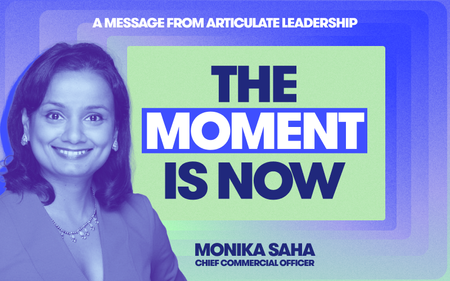
Hi SarahSterner-66 ,
I understand the concern you’re raising. You’re worried not only about what these tools can actually do, but about the decisions companies may make because of what they think the tools can do. I don’t want to dismiss that.
I also want to share some context for why we built what we did.
Over and over, in health checks, feedback sessions, and thousands of other conversations with our customers, L&D teams have told us they’re being asked to do far more, at an aggressive pace, with fewer resources.
They told us they needed the SMEs they already work with to do more than review content at the end of the process. They wanted ways for those experts to contribute more directly, while L&D could still establish the standards and guardrails. They wanted more choice in the kinds of content they and their SMEs could create. And they wanted Articulate to work more easily with the other tools and systems their organizations already use.
Those needs are a big part of what shaped this launch. We did not build it around the belief that L&D expertise is becoming less valuable. We believe exactly the opposite.
A huge amount of learning already gets created outside L&D today, by sales teams, support teams, managers, SMEs, and others who hold expertise closest to the work. L&D often plays a critical role in shaping that learning, but no single function can be present in every moment where knowledge needs to become capability.
Much of what gets created outside formal learning today ends up as a deck, a document, a recording, or something generated with a generic AI tool. That is already happening across organizations.
We want L&D’s expertise to reach more of that work. Their standards, judgment, and understanding of what helps people actually learn and perform matter because information alone doesn’t build capability.
That doesn’t mean everyone becomes an instructional designer. It also doesn’t mean the expertise of an experienced L&D professional can be reduced to a prompt. It means that expertise can influence far more of the learning happening across an organization.
If an organization assumes that access to AI, or what we launched this week, means it no longer needs real expertise and judgment, I think that’s a mistake. Technology can extend what experts are able to do, but it doesn’t make their expertise irrelevant. Organizations that lose that distinction may move faster in the short term, but they risk compromising the quality of the learning they create and ultimately the performance and business results it’s meant to support. That’s part of why this community’s expertise, and the standards you set, matter more right now, not less.
Will the work change? Yes. Some of the production work will become easier and faster, just as it is in many professions right now. But our belief is that this makes the distinctly human parts of L&D, including judgment, strategy, standards, understanding the learner, deciding what people actually need to be able to do, and knowing whether learning is working, more important, not less.
I also know that doesn’t eliminate the anxiety you’re describing. But I wanted you to hear directly from me that the intent behind this launch isn’t to make the people who built this profession irrelevant. It’s to build technology that gives their expertise much greater reach. And we have a responsibility to keep listening closely to this community as the way people work continues to evolve.
Noele_Flowers has already offered to connect with you directly, and I’d be happy to join that conversation as well.