Example

no ELC#533
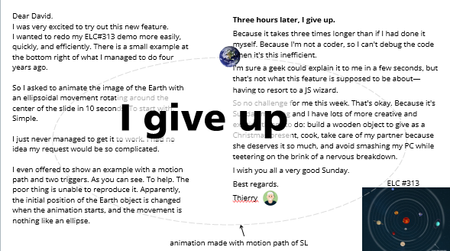
Thanks for all these explanations, Nedim. Once again, I’m learning a lot. You’re obviously right—my code had issues. But the PROBLEM is that it’s not MY code; it’s the AI assistant’s. And if I’d been able to provide all those details to it, it could have corrected the code, and I could have written it. So, back to square one: what’s the point?
The part I can improve is how to write better prompts. But in this specific example, I REALLY spent 4 hours writing commands, describing the failures in detail, reporting the console output, simplifying my requests to start simple and then improve. And I never got results like the ones you seem to have gotten so quickly. So, I think, even though you might not realize it, you’ve helped the assistant MUCH more than the assistant has helped you, thanks to your knowledge. Which is something I’m not yet capable of doing... Back to square one. Thanks again.
I’m keeping the modified file because I often use code that works (yours, for example 👍) to tell the assistant: study this working code and modify it JUST to do this extra thing. At least it starts with good ideas (not mine 😀).

No problem, anytime ThierryEMMANUEL. I totally agree with you about the AI assistant’s functionality. Prompting is important, but so is our time, especially if it takes too many iterations to execute exactly what we need. It would be much more useful if the assistant actually understood the Storyline environment and had a more context-aware API. Don't hesitate to reach out whenever you get stuck.



Getting Started with the E-Learning Challenges
Find practical answers to common questions about the E-Learning Challenges, a weekly event that helps you build skills, create your portfolio, and grow as an e-learning professional.