storyline
207 TopicsCounting Slides Using Built-In Variables
This week's tip comes from RonPrice at our certified training partner, Yukon Learning. Sometimes you want to show your learners what percentage of a course they've completed, or how many slides they've viewed so far. Did you know there's a built-in variable for that? In this video, we'll show you how to use the Slide Number variable on the slide master to display how much of a course a learner has completed. Resources: Yukon Learning YouTube Channel Need Articulate 360 Training? Sign up.49Views1like0CommentsDemystifying Text Styles
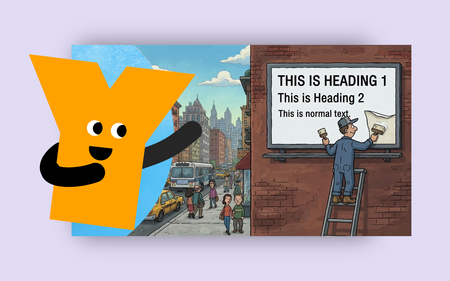
This week's tip comes from John_Moore_YL at our certified training partner, Yukon Learning. Text styles in Storyline control the visual appearance of text elements, such as paragraphs and headings. They also play an important role in accessibility by making courses easier to navigate with a screen reader. There are six default text styles in Storyline: Normal, Heading Levels 1-4, and Hyperlink. In this video, John will show you how text styles help you create more consistent, accessible, and efficient course designs. You'll learn: What text styles are How they are applied in Storyline How they make formatting and updating your courses easier Resources: Yukon Learning YouTube Channel Need Articulate 360 Training? Sign up.67Views2likes0CommentsHow to Build Drag-and-Drop Interactions
Encourage learners to make decisions and engage with slide content using a drag-and-drop interaction you can build in minutes. In this webinar, you’ll learn how to quickly create and customize a freeform drag-and-drop interaction in Storyline 360.1.2KViews0likes0CommentsHow To: Build a Progress Bar in Storyline 360
Progress meters are a great way to manage learner expectations by letting them see how much of your course they’ve completed. In this webinar, you’ll learn how to work with number variables and custom states to visually indicate learner progress.512Views0likes0CommentsWorking with Built-In States
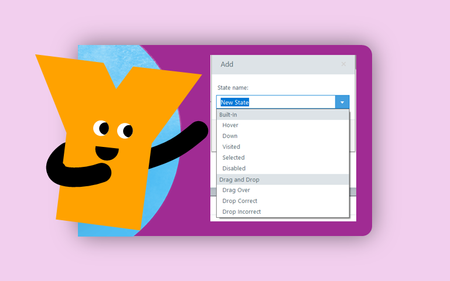
This week's tip comes from RonPrice at Articulate's certified training partner, Yukon Learning. Built-in states are typically the very first type of interactivity someone sees in Storyline. Hovering over or clicking on an object and seeing that object respond is a simple and popular effect in digital learning. It is also one of the Storyline features that gets over-programmed by new Storyline users. The beauty of built-in states is their simplicity. In this video we'll show you the basics of working with states! Resources: Yukon Learning YouTube Channel Need Articulate 360 Training? Sign up.90Views3likes0CommentsStoryline: Interactive Timeline Template
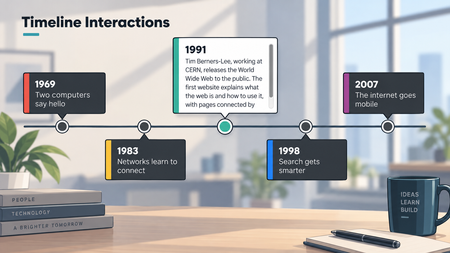
Here's a free timeline interaction designed and built in Storyline. One thing that's a little different in this build is how the text is applied to each closed and open card. Rather than using states and text boxes, you place the text directly on the shape, heading and body copy both. The shape's margins control the spacing and keep everything aligned. There are some nuances to this approach, but the benefit is rapid updating. View the interaction1.1KViews4likes0CommentsSwitching between languages in the LMS
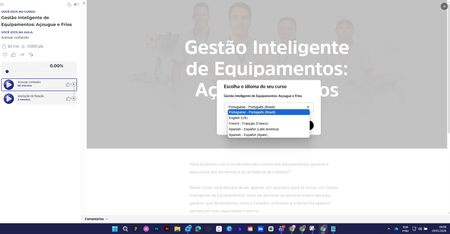
Hi everyone, how are you? I used the "Localization" feature in a course. After making the content available, when selecting a language I can't revert to the original language. What am I doing wrong? Choice of language After this, it is no longer possible to change the language. Thank you in advance.981Views0likes11CommentsUsing Storyline's Media Library Like a Pro
Think Storyline 360's Media Library is just a place where your images go to live (and maybe get lost)? Think again! In this engaging, power-packed session, you’ll discover just how much creative control and time-saving potential is hiding inside Storyline 360’s Media Library. Whether you’re building simple e-learning interactions or managing large-scale e-learning development projects, knowing how to organize, reuse, and update your media like a pro can seriously speed up your workflow. In this session, you'll learn how to bring in your assets efficiently, keep everything organized (yes, even those mystery images named “image1234.png”), and swap out graphics, audio, and video with just a few clicks. We’ll also cover using the Media Library for accessibility tasks, tracking asset usage across your course, editing externally, and even building branded templates you can reuse again and again.1.3KViews0likes0Comments