build-a-thon
31 TopicsHandy Templates! – Three Reusable Rise Code Blocks for Everyday Problems
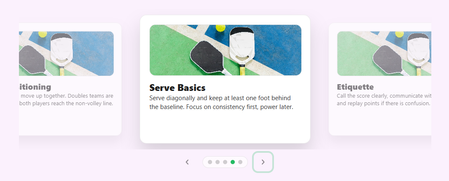
For this Build-a-Thon, I decided to submit a small collection of reusable Rise Code Block templates rather than a single standalone interaction. The idea behind Handy Templates! is simple: When working in Rise, there are a few patterns we reach for again and again, but they are either not available natively or require workarounds that compromise usability, accessibility, or visual consistency (I know you know a few...) This submission brings together three practical, “use-them-tomorrow” templates that are designed to feel native to Rise while extending what is possible with Code Blocks: Floating Text Cards Carousel MCQ with No Right or Wrong Answers + Side Image Likert Scale (Click-to-Reveal Reflection) Each block is fully reusable, configurable, and intentionally designed around real instructional use cases rather than novelty. Detailed descriptions and the codes for each block are included directly in this Rise review link: https://360.articulate.com/review/content/d4be7478-bd5a-49bd-a972-642ddc47c43b/review If any of these solve a problem you have worked around before, feel free to copy, adapt, and make them your own. That was the goal!!!1.5KViews13likes7Comments3D Earth with AI Answers
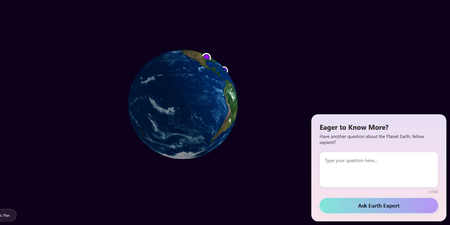
Welcome, fellow sapients. https://share.articulate.com/U8kfr26OJxy8A65LiK81f#/lessons/fPF4HhLiVMzFah3yIdjSa6szq-nIUk1s You are now observing a three-dimensional reconstruction of Planet Earth. Please remain calm. The planet cannot see you. It cannot hurt you. Before you is a fully manipulable model of Earth, rendered in three dimensions for your convenience and mild confusion. You may rotate it, zoom into it, and peer at it from all angles. This is encouraged. Staring blankly is also acceptable. Affixed to the planet are hotspots, carefully tethered to specific geographic locations. Not that the hotspots will contain information relevant to those locations, of course. That would be far too humanesque of us. No, selecting one will reveal contextual insights about the planet, its climate, and the questionable decisions made upon it. While our earlier attempts resulted in the hotspots wandering freely across the globe, that was deemed unscientific and embarrassing, so we scolded them in place to ensure they were no longer a flight risk. No hotspots were harmed in the making of this interaction. Should further clarification be required—and we expect much clarification to be required given the subject matter is home to an ape-specimen which shares the majority of its DNA with a fruit known as a "banana"— you may also consult the Supreme Intelligence interface. This entity has been trained to answer follow-up questions about the planet, its artifacts, and its former inhabitants with tireless patience and only minimal judgment. It's not often that we get to marvel at a fine specimen of a planet This method is not limited to doomed planets. The same approach can be applied to any three-dimensional object: artifacts, environments, machines, historical items, or things no one understands but insists on learning about anyway. Any 3D model capable of being rendered may be rotated, annotated, and interrogated via hotspots and AI, making it ideal for exploration, analysis, and controlled bewilderment. This experience was assembled using a combination of: AIReady, to orchestrate the interaction logic and conversational intelligence .glb 3D model files, because the universe insists on file formats Persistent experimentation, particularly when the hotspots refused to stay where they were told You may proceed with confidence. The model is stable. The hotspots are secure. The planet, however, is not.384Views12likes2CommentsRisk Quest: Investigator Training
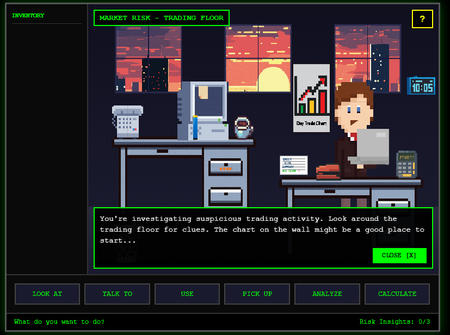
Code Block Experience Inspired by the old point-and-click adventure games, I wanted to build a simulation-style experience that lets learners have fun while actually practicing investigation skills. In this scenario, you step into the role of a newly assigned Risk Investigator trying to figure out why financial projections don’t match real-world returns. Projects like this usually don’t happen. Not because they aren’t valuable, but because they take time, money, and resources that most teams just don’t have. Fast builds are expected. Games are not. So instead of waiting for the perfect conditions, I used Rise Code Blocks, ChatGPT, stock images, and a lot of trial and error to build a playable proof of concept the team could realistically evaluate. The Risk Quest demo puts you directly in the investigation. You explore the environment, pick up and use objects, connect the dots, and report back what you’ve uncovered. If you’re not paying attention, you’ll miss things. That’s intentional. The project is broken into three parts: Risk Quest Demo Play the experience. Be the investigator. Figure out what’s going on. Risk Quest Evolution Walk through how the project evolved from v1 to the current POC. You can see what changed, what stuck, and what ideas didn’t survive contact with reality. Hidden Assets All of the graphics used in the experience and how they were stored and referenced directly in the Code Block as the look and feel evolved. And yes, this whole thing is heavily influenced by nostalgia. Did anyone else play these growing up? Zak McKracken and the Alien Mindbenders, Maniac Mansion, Sam and Max, Indiana Jones and the Fate of Atlantis, and my personal favorite, Monkey Island as Guybrush Threepwood. 😁 Take a look, share feedback, swap a memory or two, and enjoy.591Views11likes3CommentsPaint by Num-Birds: Songbird Identification Tool
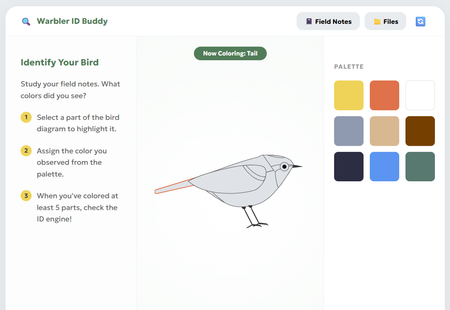
This interaction pushes learners to get curious and creative while identifying some of the most notoriously difficult bird species to spot - warblers! The paint-by-numbers interface paired learning materials (like snapshots, anatomy diagrams, and their own field notes) introduces learners to the fundamentals of bird identification, and allows them to explore this process of visually ID'ing a bird for themselves. Review Here: https://360.articulate.com/review/content/54d099bd-477a As a team with avid birdwatchers, trying to "onboard" people to the hobby always poses a classic blocker: "How do you tell the birds apart?" Though sound, habitat, and other factors play a role, visuals are the first pillar of identification that beginners start to familiarize themselves with. Using Rise's code block, we wanted to create a tool that went beyond flip cards, checklists, and other default interactions. Leveraging HTML/CSS, we created a workshop space that: Breaks down key features to note for ID'ing through an interactive diagram Offers as much or as little support they may need in the form of the snapshots, diagrams, and facts in the "Files" Provides a challenge to apply what they've learned by identifying the "Field Notes" recordings To build this block, we used a mix of vibe-coding and human code expertise! Once we had refined our idea on our own, Gemini was enlisted to help create the basic UI and functions. The functionality was refined and adjusted many times for user ease and clarity. Finally, we looped human experts back in to polish the code, refine the diagram, and squash any stubborn bugs. It was a whirlwind learning experience! Some takeaways: Having the AI refine snippets of the code ensured overall block integrity. We made the mistake at the start of having Gemini spit out a whole new HTML file to adjust minor pieces; we found it changed things that we hadn't asked it to, and actually got "lazy", condensing body text and dressing down UI elements increasingly with each iteration Knowing when to use AI, and when to call in a human expert was our superpower. Gemini deeply, SERIOUSLY struggled trying to create an SVG of a bird. So, we took the monstrosity it outputted and edited the code ourselves to create an image we were happy with! We also enlisted our senior developer to jump in and fix some serious coding errors that had made the block totally un-playable. Not all AI's are made equal: Canva's AI was very promising for vibe-coding at first, but Gemini ultimately became our tool of choice as it provided the most accurate and useful responses. We chose this activity because as bird lovers, we know that warblers in particular have such subtle differences - a black eye ring on one bird might make it a totally different species from the next! The ability to paint and visually describe these tiny differences seemed like the perfect learning opportunity for this challenge (and get our other coworkers on board with birding)! Let us know what you think! Were you able to paint a perfect match? Created by Aamir Aman, Tal Castillo, and Ryan Young.4.3KViews37likes15CommentsFlavor Chemistry Lab + Dare
I decided to experiment with the new Code block by creating a Hybrid “Flavor Chemistry Lab + Dare” interactive experience. Learners begin in the Lab, where they mix ice cream flavors and explore why certain combinations work well together. From there, Dare mode gently nudges them to stretch their thinking by introducing contrast, texture, or unexpected twists. This idea was inspired by the concept of psychological safety and experiential learning — creating a space where there are no right or wrong answers, just opportunities to explore, reflect, and notice instinctive choices. I used the Rise Custom Code block to build the interaction and experimented with different prompts, pairing logic, and reflection nudges to keep the experience engaging while still grounded in learning design principles. One of my biggest takeaways from this process was how small design choices — wording, tone, and nudges — can shape how safe learners feel when experimenting or thinking outside the box. Curious to see how the Lab and Dare experience works? You can explore the microlearning here: https://share.articulate.com/Q4h36BePCOhIKRc9z6Ygw Thank you to the community for the inspiration and creative ideas shared throughout the challenge. It’s been fun seeing how everyone is stretching the possibilities of this new block.59Views1like0CommentsCMY Mix Lab
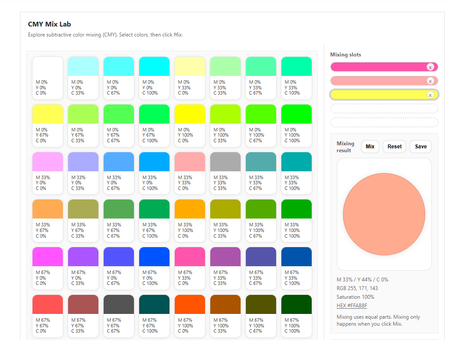
An experiment in pushing Articulate Rise beyond fixed variables and linear flows. What this is The CMY Mix Lab is an interactive experiment built in Articulate Rise to explore what happens when you are no longer limited to a fixed set of variables. Unlike standard Rise blocks, and even compared to Storyline, this approach allows for a virtually unlimited number of variables and states within a single interaction. For this challenge, I wanted to build something that cannot be created in Rise in any other way. The mixer relies on continuously changing values, combinations, and outcomes rather than predefined slides, layers, or triggers. Everything happens inside one custom block, driven by logic. How it was made Full transparency: I’m not a programmer. This project was very much vibe coded. I built it by experimenting, tweaking values, breaking things, and fixing them again with the help of AI and a lot of curiosity. Working this way felt very different from building in Storyline or standard Rise blocks. Instead of defining all states upfront, the interaction reacts to whatever values the learner creates in the moment. That shift in thinking was a big part of the experiment. The challenge One of the biggest challenges has been (and still is) accessibility. Mouse interaction works well, but I do not have a stable, fully keyboard-accessible version to show you yet. Improving this is something I am actively working on and continuing to refine. This challenge is also part of what makes the project interesting to me. It clearly shows both what Rise can already do and where its current limits are, especially when you start working with many dynamic variables. Why this build This build is not about delivering a perfect or finished solution. It is about exploring possibilities, learning by doing, and testing how far you can push Rise without relying on Storyline or predefined interaction patterns. If this experiment inspires other Rise users to think differently about variables, logic, or custom code, then it has done exactly what I hoped it would do. Vote If you like this experiment or find the idea behind it interesting, I’d really appreciate your vote. https://share.articulate.com/aWvCo417oehOA2FTwbHLA Oh... one last thing! Try mixing with "white". You'll be surprised. :D140Views3likes0CommentsChicken Noodle Soup
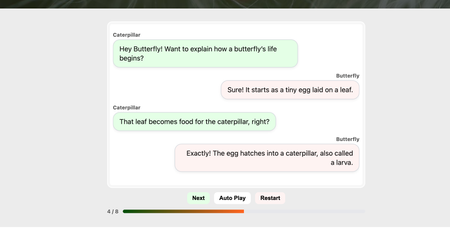
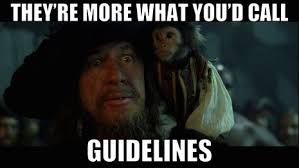
Inspiration It feels like yesterday that I remember smelling the sweet scent of vegetables cooking in the kitchen when I asked my mom to teach me how to make chicken noodle soup for the first time. Last week, I happened to get a call from a younger sibling asking if I had that very recipe. The problem is, my mom rarely wrote down a recipe. Being a true chef through and through, she always thought of a recipe as more of guidelines than anything. There are many ways to prepare any dish, but the cooking skills you learn in between each one are what are so valuable. I thought this was a great recipe to teach some of those basics, and I thought it would be a unique challenge to try to think of some fun ways to use the code blocks to teach Entry Link: https://360.articulate.com/review/content/1630401d-4e73-47a1-bb7a-cb6dab63dd75/review Prompting process If you’d like to see the actual prompts I used to generate each of the code blocks throughout the course, please check out the final lesson “About this recipe”, where I have included each prompt that was used to generate the code. This isn’t where my process began. Having some basic knowledge of coding, I first began by writing down descriptions of the skill I was trying to teach, along with listing the various components and mechanics behind the vision for the interaction. I began by using ChatGPT to feed it this information and help it understand each component of the overall training. Occasionally, I would use it to help focus the vision behind a block's design and ensure that I was ideating with the capabilities of custom AI-generated code for the web. Tools Due to limitations with free accounts and the imperfection of AI, I worked with several tools to help get the results I was looking for. (Mostly because I ran out of free tokens constantly) Articulate Rise ChatGPT BoltAI ClaudAI Mom’s chicken noodle recipe Block Design Get ready checklist - Looking up recipes on the web can sometimes feel like a nightmare, and everyone prepares their article differently. I thought it might be nice to not only have a list of ingredients you’ll need, but an easy way to create a list of what you still need to go to the store for. Mirepoix Visualizer - When making the mirepoix, my mom could always tell if she needed more of an ingredient just by looking at what she cut up. While an even dice for an even cooking time is crucial, it also helps visualize the ratio of vegetables you’re preparing. Since the size of most vegetables at your local grocery store can vary from location-to-location or even week-by-week, the amount you prepare can change. This is why for this activity, I wanted to create something that can help visualize the ratio you are preparing (assuming your diced veggies are roughly the same size). Spice Blend Activity - I’ll be honest with you all, I rarely measure out my spices. I was taught to taste as I go since you can always add more spices but can’t take any out! Recently, I was inspired by some cooking videos on TikTok where chefs were talking about how different ingredients interact with each other. I wanted this tool to give learners an idea of how different ratios of spices can lead to different results. I will admit I don’t know enough cooking science to build out all the intricacies of flavor, but I felt like the AI provided a great proof of concept. Chef Consulting Chatbot - Inspired by some chatbot examples I have seen on the ELH forms, I wanted to re-create a teaching moment I experienced when I was younger. Home cooking often requires you to balance what you have time and energy for, with how tasty you want your results to be. Because of this, I often havea few processes for each recipe I make to give myself the ability to swap out techniques. Instead of teaching someone each technique, it's easier to recommend one that will fit their needs —hence, where the inspiration for the chatbot fits great!378Views3likes1CommentCheese Party
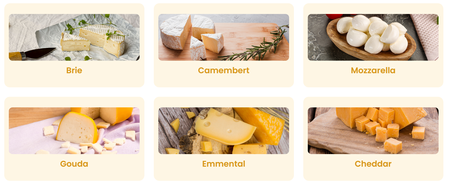
Hi everyone! I tried creating a full mini-course and made the most of different ways to use the code block. The course itself is more entertainment-oriented: I didn’t focus much on the content and instead concentrated on exploring the capabilities of the blocks. As a result, the only standard blocks used in this mini-course are images, text paragraphs, and navigation buttons. I don’t know how to code at all, so I actively used ChatGPT, which helped me bring my ideas to life. I was really inspired by examples from Stephanie’s List and Shannon’s List. Huge thanks for sharing them! Since I’m not familiar with coding, my first question was: what is actually possible? It had never even crossed my mind to create something like this. These examples were incredibly helpful — I tried recreating some of them and adapting them to my course, and also added a few ideas of my own along the way. I took away a few useful insights and ideas for the future: Learn the basics of writing code. I didn’t have much time to dive deep into the topic, but I figured out how to change colors and font styles on my own (pretty proud of that 😂). I found a lot of inspiration in web design examples available online. Many of them can be adapted to fit your own ideas. I truly enjoyed the process. Being able to bring even the craziest ideas to life is pure childlike joy when things finally work. Thank you all!708Views4likes7CommentsStop guessing code, perform the Ritual of AI 🐦⬛
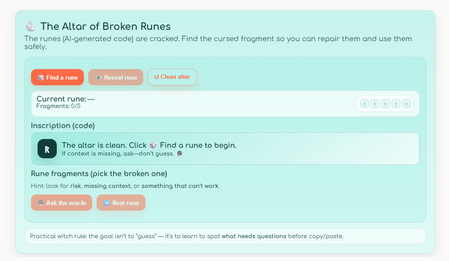
Try it here! Do you feel like a witch casting mysterious spells every time you use AI to create code? This little Rise is a bit about that: when vibe coding, it’s easy to copy/paste something that looks right… but has a tiny crack hidden inside. And unlike real magic, code doesn’t “kind of” work. So, why not turning that feeling into a ritual you can trust? You’ll meet a handful of “broken runes” (small AI-generated code snippets). Your job is to inspect the inscription, pick the fragment that is broken, and then ask the oracle to reveal what went wrong and, most importantly: how to fix it. The point isn’t to guess correctly on the first try. The point is to train your eyes to spot the things that deserve a second look: mismatched names, missing context, and logic traps that run but lie. By the end, you’ll have a simple review habit you can use anytime AI hands you code: trace what triggers what → check names → check assumptions → check logic. No smoke, no mirrors. Just practical witchcraft for safer vibe coding. ^^ Psss: ✨ From witch to witch: if you spot an error in my code or explanations, please correct me. This is a shared circle of learning and we definitely don’t want to accidentally invoke a malignant entity. 🐦⬛96Views3likes0Comments