e-learning challenge
1054 TopicsProductivity Pulse
For this challenge, I designed a quick checkup that will analyze the user's daily work habits and suggest productivity hacks. Based on the user's responses, final results and productivity suggestions are grouped into Starter, Optimize, or Advanced productivity tricks and tips. Hopefully there are some hacks in there that you find helpful if you're like me and can't can't seem to find enough hours in the day to get everything done. Productivity Pulse Assessment506Views15likes5CommentsPantone COTY 2026 - Creative GSAP 3D Effect for Articulate Storyline 360
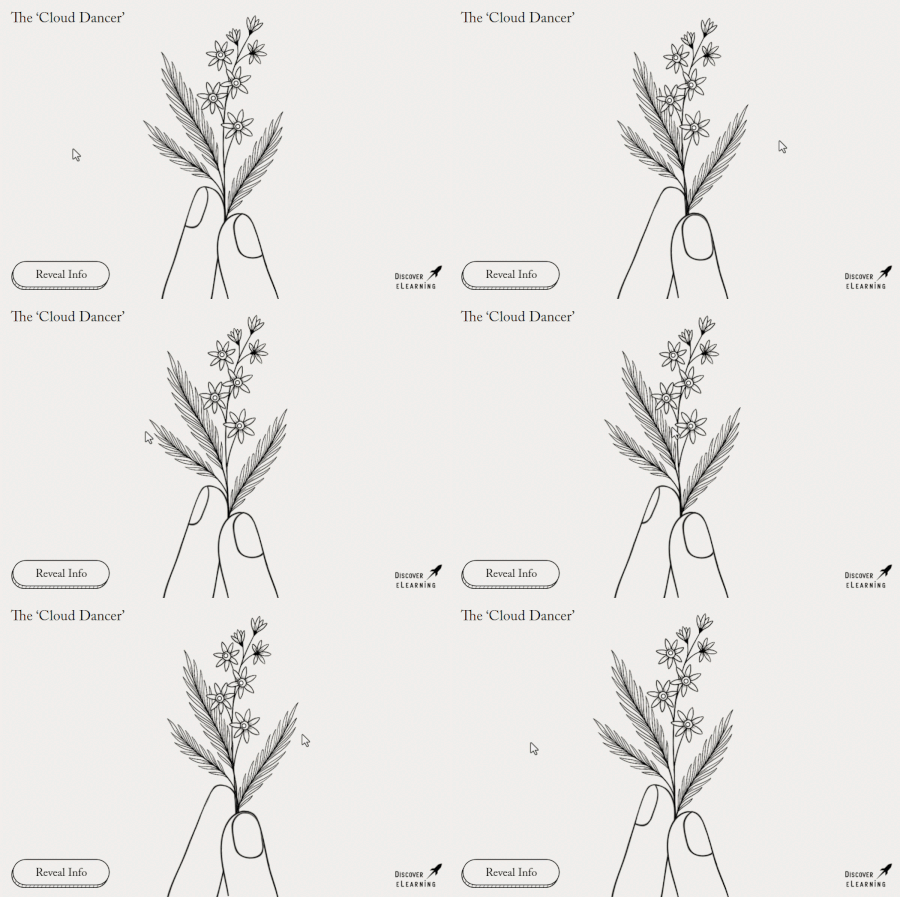
For this year's Pantone COTY E-Learning Heroes Challenge, I wanted to explore how motion and perceived depth could be pushed further within Articulate Storyline 360 with the help of the GSAP animation framework! This demo creates the illusion of a living, breathing scene that subtly responds to the user's mouse or finger movement across the screen. Combining parallax and masking techniques together with GSAP scripting, the result is an interaction where each illustrated element appears to rotate and drift in three-dimensional space, even though everything is built using flat 2D shapes. Check out the interactive version here: https://discoverelearning.com/insights/pantone-coty-2026-cloud-dancer-creative-gsap-3d-effect-for-articulate-storyline-360/Fixing Slide Positions For Drag Interactivity On Mobile Using JavaScript
Hey Heroes, I’ve recently been working on a number of client projects that really put the new JavaScript API in Storyline to good use! One challenge I had to overcome was how Storyline behaves on mobile devices. By default, it seems to add a slide-drifting transition when users swipe—great if you're building swipe navigation between slides, but not so helpful when users are meant to interact with objects on the slide itself. For example, trying to drag an object can instead cause the whole slide to shift, which can lead to some confusion and frustration. For this week’s challenge, I’ve put together a demo that showcases the solution I developed to disable this behaviour when needed. You can try out the project here: LINK Copy the JavaScript code snippet for your own projects: LINK I also recorded this video for YouTube showing the results:
What’s Your Celestial Learning Persona
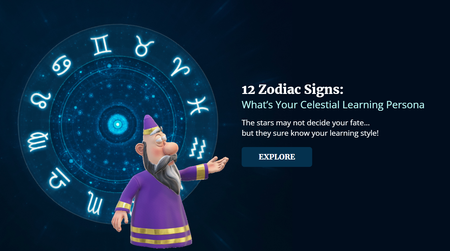
In this challenge, I used a listicle format inside a scroll panel to explore how the 12 zodiac signs connect to learning styles. Each sign reveals a short, scrollable insight into how that type of learner might thrive — whether you're a curious Gemini, focused Capricorn, or imaginative Pisces. Just scroll through the list and discover which celestial style speaks to you :) What’s Your Celestial Learning PersonaStop Answering Questions. Start Redesigning Them.
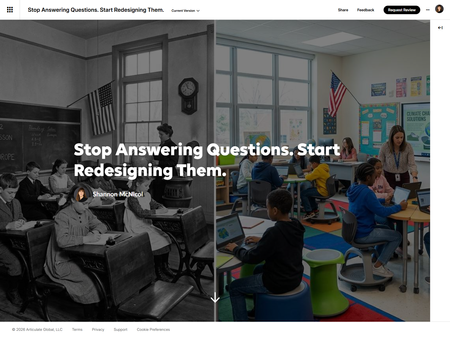
This week's E-Learning Heroes challenge dropped a fascinating artifact in our laps: the 1912 Bullitt County Schools eighth-grade final exam. And everyone's first instinct was the same: could I pass this thing? And honestly — maybe not. There's a grammar question asking students to write a single sentence containing four specific grammatical elements simultaneously. There's compound interest math done by hand. There's a civics question — "What is the proper basis of civil government?" — with no word limit, no rubric, and apparently no fear of what a fourteen-year-old might actually write. It's a fascinating artifact. And the obvious eLearning move would be to modernize it into an assessment. Swap the open-ended questions for multiple choice. Add a scenario. Slap on some feedback. Done. I went a different direction. What if the learner was the designer? Instead of asking people to answer the 1912 questions, we asked them to redesign them. Pick a question. Tag the instructional design strategies you'd apply — scenario-based, cause-and-effect, perspective-taking, transfer task, twenty options in total. Watch a live compatibility meter tell you whether your combination is a strong pairing or a bit of an overcrowded mess. Then get feedback: a scorecard rating your approach on cognitive load, authenticity, and transfer potential, plus a specific strength, a push-it-further nudge, and one genuinely hard reflective question to sit with. And at the end — a before/after reveal comparing the original 1912 question to an expert redesign, so you have something concrete to react to, agree with, or argue against. The whole thing runs in a single HTML file embedded in Rise via a Code Block. No frameworks, no dependencies. Why this framing works Most eLearning about instructional design is passive. You read about Bloom's taxonomy. You watch someone explain cognitive load theory. You take a quiz about it afterward. This puts you in the seat. You make a call — I'm going to apply scenario-based learning and cause-and-effect framing to this arithmetic problem — and then you get a mirror held up to that decision. The compatibility meter alone has a way of making you pause and ask whether you're building a coherent design rationale or just stacking strategies because they sound good. The 1912 exam is the perfect raw material for this because the questions are so far from modern practice that every design decision feels deliberate. You can't default to habit. You have to think. Give it a try below and let me know — which question did you pick, and did the compatibility meter surprise you? Built with Articulate Rise 360 and Claude by Anthropic. Stop Answering Questions. Start Redesigning Them.Merge Dimensions
Hello! The most obvious use for this new feature is to cut holes in backgrounds to create sci-fi portals, right? For this first-person Rick and Morty-inspired interaction, I used the Merge Shapes tool to cut a hole in the background image. (I created this image using Articulate's AI tool.) Through the hole, you can see another image, beneath the swirling portal GIF. A combination of freeze/resume timeline triggers, a drag-over interaction, and a zoom panel, complete the experience. The portal gun is adapted from this 3D model by kreems on SketchFab. Just a bit of fun, probably not quite safe for work, but took me next to no time to time to create in Storyline with very little outside software required. Check it out here. Wub-a-lub-a-dub-dub!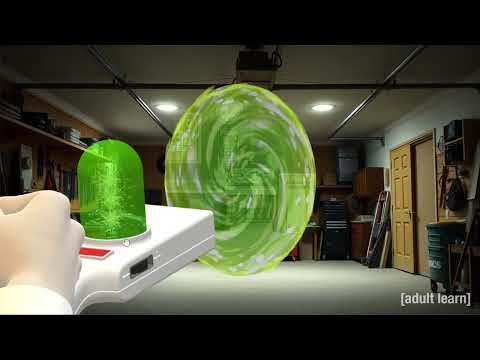
Vault Zone
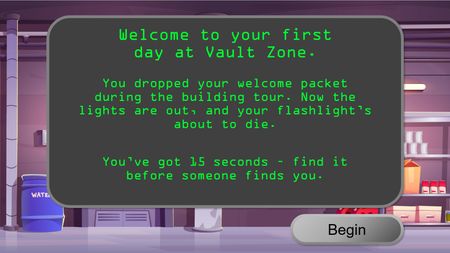
Long-time listener, first-time caller here. I'm still pretty new to the JavaScript game, but I wanted to challenge myself this week and see how far I could get. This simple game has four scripts running on the base layer: 🔦One hides the cursor and moves the flashlight with the mouse 🏞 One moves the background (and target area) as the cursor pans left and right ⏱ One handles the countdown timer 🎯 One checks if the user has found the target and triggers the "You Win" layer The “You Win” and “Time’s Up” layers each include a small script to bring the cursor back after the game ends. With more time, I’d love to make the "computer screen" graphic with onscreen text more dynamic - but for this version, I really wanted to nail the core mechanics. I relied on ChatGPT for a lot of the JavaScript support, but honestly, I learned a ton through the process - especially having to figure out where things were off or how to adapt code to work with Storyline’s triggers and native capabilities. https://360.articulate.com/review/content/24c010db-096a-49a5-a1d8-11d83f908b12/review427Views6likes5CommentsFeelings Pulse
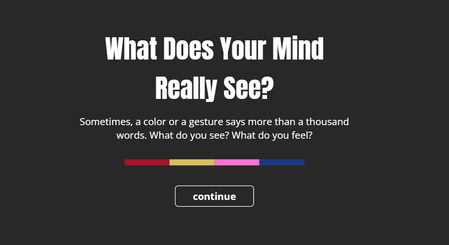
This is an interactive experiment using poll-style questions within a video. It’s designed to describe emotions through colors and characters, using four simple questions. Each question is linked to a color — Red, Yellow, Blue, and Pink — and presents a few emotional choices for you to pick from. You’ll only be able to select one answer per question, and only once per session. Your response is saved anonymously and added to the overall results. At the end, you’ll see how others have answered as well. This isn’t based on any scientific research — it’s just a creative way to reflect on emotions and try out interactive video features. Thank you for being part of it. Feeling Pulse