translation
6 TopicsAudio Translation
Hi everyone, I have a question: will a translate audio feature be added to Localization? I'm testing it during the trial period and just noticed that it only translates the text on screen, not the audio, so we have to type or re-record the text in the new language, which is quite time consuming. Thank youSolved1.2KViews1like11CommentsSwitching between languages in the LMS
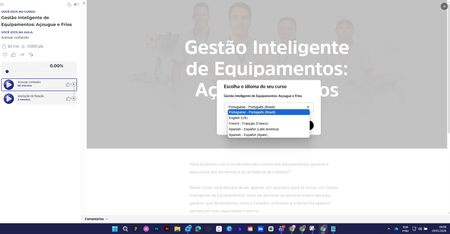
Hi everyone, how are you? I used the "Localization" feature in a course. After making the content available, when selecting a language I can't revert to the original language. What am I doing wrong? Choice of language After this, it is no longer possible to change the language. Thank you in advance.819Views0likes11CommentsLocalization translation of closed captions
Hi - We have just started using the translation features and received this feedback from a reviewer "In general, the translation is good. However, in the section which translates the closed captions of the videos, as it takes only one sentence at a time, it loses all sense and is very difficult to correct." Has anyone had the same experience with the translation of closed captions?399Views0likes1CommentTranslating a course into Farsi
Hi Everyone. I am still pretty new to Articulate and brand new to the world of translating an e-learning. I apologise in advance if I am on the wrong forum as I am not subscribed to Articulate Localisation so my question is not about that service but translation in general. I have spent the whole day researching the best way to translate my small eLearning from English to Farsi, using copilot and ChatGPT as advisors. Various tools like Smartcat, Crowdin, Localise were recommended but the pricing plan felt high for me given I am just starting out and the NGO i am developing my first e-learning for also doesn't have a lot of money to pay out each month. In short, given I already had the content translated into Farsi in a word document, I decided to manually upload the Farsi version into Rise and then align/format the text. For those elements that I was unable to align within Rise (a handful of headings and MCQs), I decided to export a XLIFF copy and using Poedit make the necessary edits/format changes. I then successfully managed to import the updated version of the XLIFF file which I was happy about as I read it can be problematic. However for the headings I was struggling to align/format - instead of correcting them to a RTL alignment it changed the headings to the original heading with the tags as text instead of interpreting them. Regarding the RTL formatting of MCQs ChatGPT said this was not possible as the formatting was baked in within Rise. When I reported back to ChatGPT about my issue with the headings and asked if I used more powerful translation tools like Localazy would I have the same issue, ChatGPT implied yes. I appreciate ChatGPT doesn't know everything. My conclusion at the end of todays research is the best thing is to continue to manually enter my translated material and make the alignment changes I can do within Rise and just accept some things wont be aligned perfectly and thats ok. However before I make this compromise (as I know I might get frustrated with this compromise as the 'test' lesson happened to be relatively simply formatted whereas other lessons have bullets, timelines, image and text blocks, etc.. which might throw up more challenges) I thought I'd seek any advice from this forum of experts. If anyone has any advice, similar experience and solutions (hopefully) or just confirmation that I need to accept this compromise I'd much appreciate it. Many thanks in advance for time and expertise. Kind regards Katheirne150Views0likes0CommentsQuery and Feature Request: Pop up when a localization credit will be used
In my last billing cycle I created a localized e-learning in 8 languages (elearning 1). In the new billing cycle I initially didn't have localization as an add-on and so couldn't open the file, instead I was prompted to save the languages as individual storyline files. Then a different project has been assigned 10 credits so localization is back as a feature but I only want to use those credits for a specific project that Omniplex are working on and not my original file (elearning 2). What I cannot tell is, if I make edits to one of the exported language files from my original e-learning (elearning 1), that I created when I didn't have localization enabled, will I be charged a credit when I publish that individual language file? And if I am not the admin of the account how do I know if a credit is about to be used / has been used? Could we please have a feature in Storyline that gives you a pop up when a credit is about to be spent? It would help a lot in trying to manage credits that have been allocated for certain projects, especially if you have a centralized account with one admin, as then users could see if and when they are at risk of spending credits they don't have allocated. Thank you for any support.52Views3likes0Comments