challenge recap
681 TopicsThe Frazzled Fork: What I Learned Building a Restaurant Meltdown Simulator
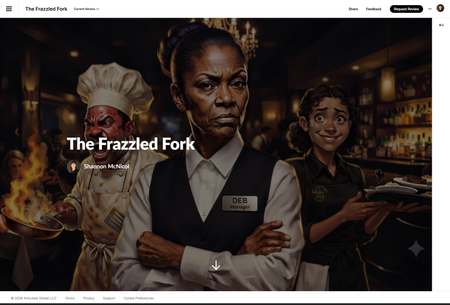
I have never worked a single shift in a restaurant. Not one. So when this week's challenge landed — build something that teaches new servers how to juggle a full section — my first thought was, "cool, I get to become a fake restaurant expert for a week." 🍽️ My second thought was: this needs characters. Funny ones. Chaotic ones. The kind of guests that make you laugh and also 100% represent someone you've actually been seated next to. So that's what I built: The Frazzled Fork — a black-and-gold, slightly-too-fancy-for-its-own-good restaurant where you're the brand new server, and your entire section decides to fall apart at once. Meet the chaos Every good triage scenario needs real pressure, and pressure needs personality. So the section you're covering tonight includes: 🍽️ The Splitters (Table 2) — a party of six who cannot agree on how to split the check, and will renegotiate it three times mid-meal 😰 Allergy Anxious (Table 5) — "I'm not allergic allergic, I just get a little itchy" energy 🙄 The Complainer (Table 7) — dish is "wrong," it's actually the kitchen's fault, but he's looking at you 🔥 Sal "Volcano" — the head chef, one ticket away from a full eruption 😑 Deb — the manager, deadpan, unbothered, has seen worse than you And then there's you: a brand new server with a creased apron and a tray that looks like it's one bad decision away from disaster. The actual learning part (yes, there's a point to all this) Underneath the chaos, this is a triage trainer. You're managing three tables at once, and every decision point forces a real trade-off: Do you greet the loud table of six, or the quiet couple who's easy to overlook? Do you flag an ambiguous allergy question, or just take the order and move on? When the kitchen slams two entrées up and a guest complaint hits at the same time — what gets your attention first? Every choice has a "best," "good," "okay," and "rough" version, and every choice ripples: help one table, and the other two feel it. Nobody gets a perfect shift. That's the point — new servers don't learn triage by being told the rules, they learn it by feeling the trade-off in real time. At the end, you get a scorecard: how each table felt about their night, a full recap of the decisions you made, and one of four closing reactions from Deb — ranging from "honestly, didn't think you had it in you" to "...okay, so, that happened." 😅 The part where Claude and I actually built this together I'll be honest, this one was a proper back-and-forth build, not a one-shot prompt: We brainstormed the concept together first — landed on "juggling a full section" as the format, then built out the characters and story beats before touching a single line of code I described the vibe I wanted (classy, black-and-gold, a little dramatic) and Claude translated that into an actual moving, glowing background — CSS doing way more work than I expected I generated the character portraits myself and handed them off, and Claude wired them into the floor view, the decision screens, and the scorecard Claude wrote the AI Avatar video scripts in-voice for Deb and Sal, and I recorded them separately and dropped them in When Rise's Code Block wasn't sizing itself properly on the taller screens, Claude added an auto-resize fix so the block adjusts itself instead of getting clipped Genuinely could not have finished this as fast without having a co-creative partner for the technical side, while I focused on the parts that actually matter — the story, the characters, the voice. Try it, break it, tell me who your Table 7 was If you've ever worked a real shift like this, I want to hear it — was your real-life "Splitters" table worse than mine? Did you ever have your own Sal moment? Go give The Frazzled Fork a shot, and let me know how your shift went. 🔥🍴 The Frazzled ForkBusiness Maths Essentials
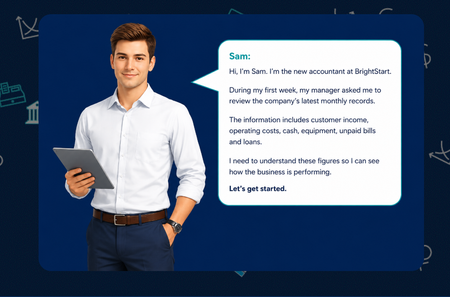
Hello everyone... For this week’s challenge, I decided to experiment with a simple combination of Articulate Rise, ChatGPT and PowerPoint. What started as a small idea quickly developed into a complete, scenario-based learning activity. I created Business Maths Essentials for new starters, using Sam, a newly appointed accountant at BrightStart, to guide learners through key financial terms, classification activities, profit-and-loss calculations and a final decision-making task. The learner supports Sam, a new accountant at BrightStart, as he works through four practical tasks: understanding key financial terms, classifying business figures, calculating profit or loss, and interpreting the wider financial position. The activities were created as responsive HTML, CSS and JavaScript components that can be placed inside Articulate Rise Code Blocks. The design uses clear instructions, immediate feedback, running totals, simple calculations and accessible keyboard controls. Consistent TS4 branding, restrained 44 px emojis and visual status cues help learners navigate the content without distracting from the learning objective. The modular structure also allows each activity to be used separately or combined into a complete learner journey. For the course banner, I adapted a template created by Tom and used PowerPoint’s Morph transition to produce a simple animated GIF, which I placed in different locations. Attached is the Rise Banner Template I used - Source : E-learning Heroes View the course: Business Maths Essentials Enjoy Dr NadiaCybersecurity Awareness - Spot the Phish
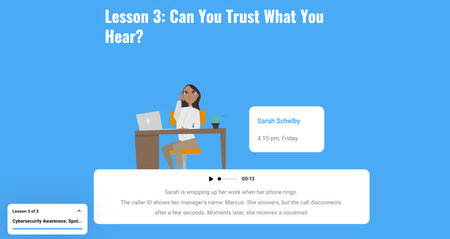
Hola....Here's an interactive cybersecurity awareness course designed to help learners recognise common cyber threats and adopt safer digital behaviours. The course uses a learner-friendly approach to introduce essential cybersecurity concepts, including phishing attacks, password security, social engineering, malware, and safe online practices. CLICK TO VIEWPrompting My Way to Better Visuals
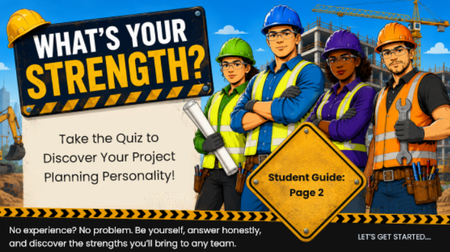
For a project we're currently developing, I wanted to create a project management "planning style" personality quiz as an engagement activity at the beginning of a module. One of the things I've enjoyed most about using AI for visuals is how quickly I can iterate on an idea by refining the prompts rather than starting from scratch each time. The Final Result Rather than using any one generated image exactly as produced, I treated each version as a design exploration. I combined elements from several iterations to create the final introductory slide for the activity. To get to the final result. I used a series of prompts: Step 1. Starting with a General Concept I usually begin with a broad prompt and then refine it based on the results. For this project, I started with: "Create a 16:9 illustration with a construction theme to introduce a project planner personality quiz." This prompt relied on an earlier prompt that generated the quiz concept itself: "Create a project planner personality quiz with different personas. The quiz should involve 5 to 10 questions and make scoring simple, such as based on score ranges or whichever answer letter appears most often." The first image captured the overall concept well, but it wasn't quite right. Step 2. Revising and Refining The initial illustration felt a little too youthful for my audience. It reminded me more of an animated children's style than something designed for adult learners entering the telecom workforce. So my next prompt was: "Make this more photorealistic. Ensure all people are wearing appropriate eye protection." While I liked the direction, I realized the rest of the module used illustrated graphics rather than realistic artwork. Instead of starting over, I continued refining the same image with another prompt: "Modify the characters so they are styled like a graphic novel for an adult audience." The style now fit the audience much better, but the colors were darker than the rest of the course branding. My final refinement was: "Modify to a brighter pop art style. Ensure all workers are wearing proper PPE, with no jewelry and hair properly restrained."93Views2likes2CommentsAI Infographics
A professional and engaging banner for an internal company newsletter titled 'Launch Your Goals MyPDP Conversations (July - August)" Create an image titled 'Code of Ethical Conduct' that visually represents ethical standards and work. Both created using Copilot. Not sure of exact prompt, but used internal copilot who had access the the documents.39Views0likes0CommentsWelcome to The Dugout
It is the 46th minute of a World Cup Final. The score is level. Your team is tired. The opponent likes to keep the ball. And the second half is about to begin. In this short challenge, you are not just learning about football. You are stepping into the role of head coach. You will make three tactical decisions. Each choice changes the match. Some decisions may create momentum. Others may protect your team. Some may work beautifully in one situation and fail in another. That is the point. Football is not only about knowing the rules. It is about reading the moment, making a call, and learning from what happens next. This experience was built using custom code blocks in Rise to create a more interactive, decision-based flow. Ready? Step into the dugout.Watercolor style / vintage illustrations
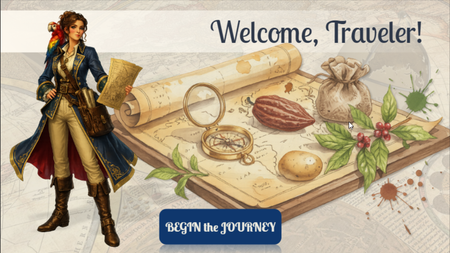
Hi, ELH community! I'd like to share a preview of my newest Storyline project, currently still a work in progress. The Secret Life of Food is an interactive learning experience that explores how everyday foods such as chocolate, potatoes, tea, coffee, and spices have influenced trade, exploration, culture, and world history. For this project, I wanted to move away from a traditional corporate look and experiment with a more immersive visual approach. I chose an old explorer's atlas aesthetic, combining watercolor botanical illustrations, vintage maps, and historically inspired characters to create the feeling of traveling through a living journal of discoveries. Learners are guided by Catarina de Silva, a fictional naturalist and explorer, as they uncover the surprising journeys behind some of the world's most familiar foods. The project is still under development, but I'd love to hear your thoughts on the visual style and overall direction. Thanks for taking a look! PROMPTS: (used for creating images in Chat GPT, Storyline AI) General style: "Vintage explorer journal aesthetic, watercolor and gouache illustration, warm parchment textures, hand-painted botanical details, historical cartography elements, museum exhibit quality, Age of Exploration atmosphere, elegant educational artwork, rich earthy palette, antique paper, subtle ink sketches, highly detailed, soft painterly rendering, casual realistic character design, storybook realism, professional educational illustration, Articulate Storyline course artwork, clean composition, high quality digital painting, National Geographic educational style, transparent background when applicable" Characters: "Full-body character illustration, casual realistic style, hand-painted digital artwork, realistic proportions, expressive face, educational museum-quality illustration, inspired by historical exploration journals, detailed clothing and accessories, subtle watercolor textures, soft brushwork, warm natural lighting, elegant pose, believable anatomy, high level of detail, not cartoon, not anime, not photorealistic, transparent background PNG." Backgrounds: "Vintage illustrated background, explorer journal aesthetic, watercolor map textures, antique parchment, botanical details, warm earthy colors, educational exhibit design, historical atmosphere, hand-painted digital artwork, highly detailed environment, immersive storytelling scene, suitable for eLearning course background, subtle depth, readable composition."255Views3likes6CommentsFootball Basics: Click the Pitch to Learn the Game
DEMO LINK For this week’s challenge, I created a simple interactive football basics activity for new fans, casual viewers and beginners who want to understand the game without feeling overwhelmed. The idea is built around a top-down football pitch with numbered clickable markers. Each marker opens a short explanation of one key football concept, such as the goal, players, positions, the ball, passing, dribbling, shooting, defending, set pieces and offside. I wanted the interaction to feel like the learner is reading the game from the pitch itself rather than moving through a traditional slide deck. The pitch acts as the main navigation screen, and the markers guide learners through the basics in a clear, visual way. How I approached the design I used a clean football pitch as the central visual so that the learning stayed connected to the game environment. The numbered markers are deliberately large and easy to spot, so learners know where to click without needing long instructions. Each pop-up includes: Element Purpose Short explanation Introduces the football term in plain English Quick example Helps the learner understand how it appears in a real match Visual support Shows the concept rather than only describing it Learner takeaway Gives the learner one simple point to remember Design rationale The design is intentionally simple because the audience is new to football. I avoided too much technical detail at the start and focused on helping learners build confidence. For example, the offside section ( Marker 10) uses a visual comparison of not offside and offside, showing what the situation looks like before and after the pass. The key message is: Freeze the picture at the moment the ball is passed. That one sentence gives beginners a practical way to understand a rule that many people find confusing. Interaction idea The learner clicks each marker on the pitch to reveal a short learning point. This could easily be expanded with: Possible addition How it could improve the activity Progress tracking Shows how many basics the learner has completed Audio narration Supports learners who prefer listening Short quiz questions Checks understanding after each topic Match scenario cards Lets learners apply each rule in context Final recap jingle Helps learners remember the key basics Reflection This was a fun way to turn football rules into a small exploratory learning experience. Instead of explaining the game as a long list of rules, I tried to make the learner feel as if they are standing above the pitch, clicking into the parts of the game they want to understand. I look forward to your input and feedback. Best Nadia :-) Here is my example: DEMO LINKThe Construct
Hello! It's surprising - and a little bit troubling - how AI seems to 'get' certain pop culture references in your prompts. Hopefully, this homage is pretty obvious! The imagery was created using Google Flow and Rise's AI Avatar tool, with the interaction controlled in Storyline. If you view this demo on a desktop, you will need to press the Y and N keys. But if you view it on a mobile device, you will need to swipe left or swipe right. TRY IT OUT HERE: https://bit.ly/elhc557 120Views0likes1Comment
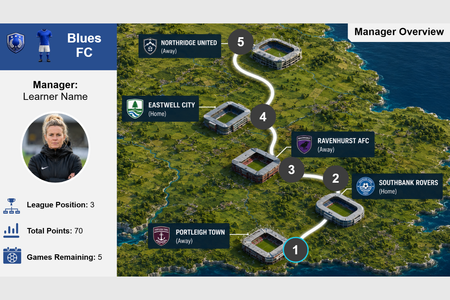
Could you be a Football Manager? ⚽️
Hello there! 👋 I recently revisited the Teaching Sports with E-Learning #537 weekly challenge. I had been looking for different ways to start building out a portfolio and it had caught my attention! I love football, despite supporting Everton... and wanted to trial some gamification in storyline! ⚽ The project utilises a variety of variables that enable learner personalisation as shown below, thus I think it is also very apt for this weeks challenge. Learners select one of three manager avatars. 👱♀️ Learners select one of three teams with differing colour schemes. 🔵🔴 Each team have differing objectives for the end of the season in regards to total points, their final league position and what would result in a contract renewal. 🏆 The learners name is assigned to the manager when signing their contract. 🖊️ The objective is to achieve the objectives of the learners selected team to receive a contract renewal for the following season. 📄 Please have a look using the link and let me know your thoughts in the comments! 👇 Confession: I spent a bit more time on this than I planned! 😅 Enjoy! 😄 Link: Football Manager Module