instructional design
147 TopicsAI Tool for creating conversations
Hi everyone, I'm exploring the possibility of using text between 2 (or more) people to create an AI-generated audio conversation, in most cases between a CSR and customer. From my web search I see there's a utility called Musely that might work but my company's internet policies block me from seeing the page. So, I figured I'd poll this wonderful group of creators to see what they may know or could recommend. Thanks!3Views0likes0CommentsWhat Is One Small Course Design Change That Improved Learner Engagement?
I'm always looking for practical ways to make e-learning courses more engaging. Recently, I've been experimenting with shorter content sections, knowledge checks, and interactive scenarios. For those who build courses regularly, what is one small change you've made that had a noticeable impact on learner engagement or completion rates? Was it related to course structure, visual design, interactions, accessibility, or something else? I'd love to hear about real-world experiences and lessons learned.146Views0likes2CommentsHow are you designing courses for localization from the beginning?
I've been thinking a lot about localization as a design decision rather than something that happens after a course is built. One thing I've learned from working on global learning projects is that decisions made early, including how text is handled in graphics, how media is structured, how reviews are managed, and how the course is packaged, can make a huge difference once you begin scaling across languages. I'm curious how others approach this. What are you doing during the design and development stage to make localization easier later?52Views0likes3CommentsWorksheet Style Interactivity Within a Course?
I am working on a course and want to try a slightly different approach, but I'm not quite sure how to go about it. Normally, we would have a video in a module, and after the video is complete, we would ask the learner to download a PDF "worksheet" and complete the exercise before moving to the next module. 80% of our user base accesses courses from a mobile device, so the chances of them downloading a PDF and completing it between modules are slim to none. Do any of you have ideas on how I could add boxes for learners to type in answers to reflection questions within the course itself? If so, is there a way they could do that AND have all of their responses at the end of the course emailed to them, so they have a complete notes packet after they complete all the modules? I'm happy to hear any and all ideas of how to make this happen (from personal experience or just "in theory this should work" thoughts)!67Views1like3CommentsNew to Instructional Design - Advice Appreciated!
Hello! I am brand-new to the world of instructional design and so excited to have discovered this amazing career path! I would really appreciate some specific advice on how to get started on building the necessary skills, theories, methodologies, etc. that are needed to be successful in this industry. I am looking to educate myself and would love to hear from those that have built their careers from the ground up. What did you do, or what would you do if you were in my position? I look forward to connecting! :)185Views1like8CommentsHow to Build a Rotating Video Carousel in Articulate Storyline
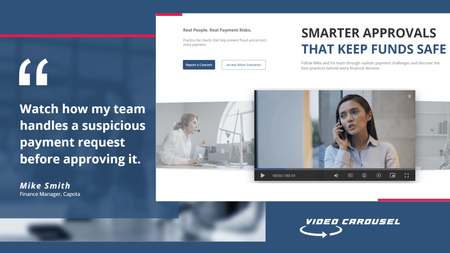
2 min read Three videos. Click a side tile and the whole set glides across, the outer tiles scaling and blurring back into depth. It loops in both directions and never dead-ends. Try the live demo first. Then here is how it goes together. The videos stay in Storyline They sit on three slide layers, Vid01, Vid02 and Vid03, as ordinary Storyline video. That matters. You keep your seekbar, your accessibility settings and your normal publish pipeline. Swapping in your own footage is just right click, Change Media. The carousel is a web object A small folder of HTML, CSS and JavaScript sits on top and draws the three tiles. The front tile lines up exactly behind the real video, so what learners click is Storyline, not a picture of Storyline. The look and motion live in one file Open config.js in Notepad. Tile size, swing distance, tilt, blur, fade, speed, play button colour and background are each one line with a plain-English comment. Change a number, save. There is no code to write. The folder rule nobody expects This is the step that may trip up almost everyone. Storyline copies the web object folder when you insert it, so pointing it back at the same folder shows you the old version no matter how many times you save. Rename the folder, repoint the web object at the new name, then publish. Why it looks blank in Preview Web objects do not render in Storyline Preview. You have to publish to see the carousel run. This is normal Storyline behaviour and nothing is broken. See it running Open the live carousel demo and click the side tiles to feel how the motion reads. Watch the full tutorial on YouTube for the complete build.78Views1like2CommentsAI‑powered, real‑time role‑play platforms
Hello Heroes! Has anyone cracked this yet? I’m exploring AI‑powered, real‑time role‑play platforms that can be embedded directly into an Articulate Rise Multimedia Embed block and run within the Rise frame—without sending learners outside the course or requiring a separate login. I’ve tested a few options, including Yoodli, but that experience redirects learners out of Rise. Other platforms I’ve reviewed are either cost‑prohibitive or not transparent with pricing. Has anyone successfully integrated a truly seamless, experiential role‑play experience into Rise? I’d love to hear what you’ve tried, what’s come close, or where you hit barriers. Thank you!1.6KViews3likes16CommentsHow to Chunk a Loooong Rise Course
Hi Everyone, Question...we do an Annual Education push for all our staff; and as it contains the yearly compliance courses, etc., it is a very long course. We have already broken it into chunks using Rise, but it still runs as one long course. The issue we are having is in our LMS - which has never been known to do bookmarks right when users need to stop and start. And users are finding when they need to leave the course and then return, they need to go thru the entire course again, as the LMS didn't bookmark. In addition, the course has just one place where it has users branch off based on their job titles. Our LMS will let us know larger courses (we use Oracle, so they're called Specializations) where several courses make up the Specialization, but again, with that branching scenario, it makes it touch to create separate courses to fit neatly into a Specialization. Anyone else do courses that branch and would otherwise be very long if you didn't use the approach you've learned to use? If so, can you share? Thanks so much!102Views1like4CommentsScaling feedback?
Do you have any way of providing feedback to your learners? If so, how do you think about scaling it? Hey all! I recently had a coffee chat with JulieDirksen and she said something that got me thinking (well, she said a lot of things that got me thinking but this was one I wanted to share!). She was talking about how for a long time, feedback was one of the last things in learning that you couldn't scale. But, she noted that with AI that is now changing—it's now more possible to scale the experience of receiving feedback on your work. As a community professional, scaling feedback is something I've long thought about doing via nominating experts from the community to help spread the expertise of an "instructor" beyond one single person—I'm actually going to be giving a session at Articuland next week in Orlando that touches on this! But, all of this got me thinking about different forms of providing feedback and how they have the potential to scale, and I wanted to pitch this question to the community and get your thoughts.214Views1like9Comments