rise
95 TopicsBusiness Maths Essentials
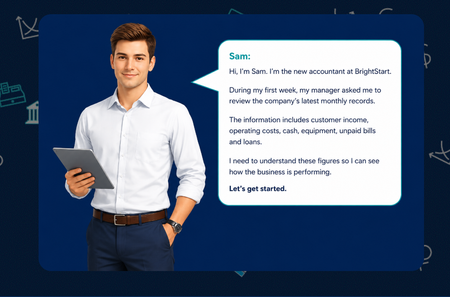
Hello everyone... For this week’s challenge, I decided to experiment with a simple combination of Articulate Rise, ChatGPT and PowerPoint. What started as a small idea quickly developed into a complete, scenario-based learning activity. I created Business Maths Essentials for new starters, using Sam, a newly appointed accountant at BrightStart, to guide learners through key financial terms, classification activities, profit-and-loss calculations and a final decision-making task. The learner supports Sam, a new accountant at BrightStart, as he works through four practical tasks: understanding key financial terms, classifying business figures, calculating profit or loss, and interpreting the wider financial position. The activities were created as responsive HTML, CSS and JavaScript components that can be placed inside Articulate Rise Code Blocks. The design uses clear instructions, immediate feedback, running totals, simple calculations and accessible keyboard controls. Consistent TS4 branding, restrained 44 px emojis and visual status cues help learners navigate the content without distracting from the learning objective. The modular structure also allows each activity to be used separately or combined into a complete learner journey. For the course banner, I adapted a template created by Tom and used PowerPoint’s Morph transition to produce a simple animated GIF, which I placed in different locations. Attached is the Rise Banner Template I used - Source : E-learning Heroes View the course: Business Maths Essentials Enjoy Dr NadiaWhat’s New in Articulate 360
Discover the latest Articulate 360 features Join us on July 28th at 11 a.m. ET [U.S.] for our What’s New in Articulate 360 webinar. See David Anderson, Director of Training, walk through all the latest features. You’ll learn how to: Let experienced learners test out of Rise courses on topics they’ve already mastered. Automatically update live Rise courses without re-uploading them to your LMS. Customize AI-generated images without leaving Storyline. Register Here606Views0likes3CommentsHow to Add a Custom Interaction Using the Code Block in Rise
This tip comes from RonPrice, Chief Learning Officer at our certified training partner, Yukon Learning. Do you need some custom content in your Rise course but you're not sure how to start? Use the code block! All you need is an idea. It's that simple. Creating a custom block has never been easier using the Rise Code Block. In this video, we will show you: How to use AI to quickly generate some code for an interaction How to insert the AI-generated code into your Rise course Resources: Yukon Learning YouTube Channel Code Block Group. Join the code block group in ELH to ask questions, post examples, and learn from other e-learning designers.267Views1like0CommentsCould You Pass the 1912 Exam?
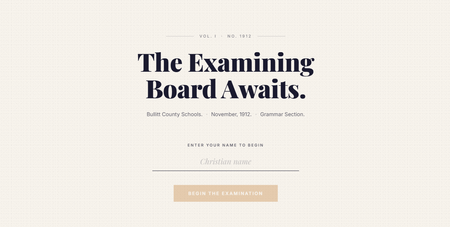
The examining board is waiting. In 1912, Bullitt County students gathered at the courthouse once or twice a year to sit the Common Examination. The local newspaper urged even seventh graders to start preparing early. It was a big deal. For Challenge #549, I didn't redesign the exam. I stepped into it. It starts by asking for your Christian name. Not your name. Your Christian name, because that is what a 1912 Kentucky schoolmaster would have said. That one detail sets the tone for everything that follows. The examiner knows your name and isn't shy about using it. The margin notes are handwritten and pointed. The feedback is sarcastic, whether you are right or wrong. Your result arrives as the front page of the Bullitt County Gazette. Personalised headline, rubber stamp verdict, and Superintendent O. Harned's wax seal. If you score zero, the editors note they have done what they can. Go on then. Submit for marking.Agentic Diagnostics: A 3-Tier AI Career Consultant for Personalized Learning Paths
The Problem: Most organizations know they need to train everyone on AI, but they don't know the specific pain points of their different roles. Standard surveys are slow, have low response rates, and often miss the "in-the-moment" hurdles learners face. The Solution: risecodeblockbuildathon For my Rise Code Block Build-a-Thon submission, I’ve built a tool that replaces the "one-size-fits-all" curriculum with an Agentic Diagnostic Engine. How it Increases Interactivity & ROI: Bespoke Consultation: After foundational training, learners don't just see a list of courses. They meet a "Consultant Bot" where they must describe a real-world hurdle they face with AI. Intelligent Prescription: Using Gemini 2.0 Flash, the tool analyzes their specific problem statement and prescribes the single best path from a 36-course catalog. Zero-Survey Insights: This is the game-changer. Because learners must enter their problem to proceed, the system collects qualitative data in real-time. Real-Time Data Dashboard: While the learner gets their custom path, L&D admins get a live "Hurdle Heatmap" in a private Google Sheet. Instant Analytics: No need for separate surveys. Targeted Strategy: Admins can see exactly which departments are struggling with "SME timelines" or "Technical Integration" as it happens. Security-First Architecture: ☁️ Google Cloud Function: Server-side Python keeps the Gemini API Key 100% hidden from the browser. 📜 Google Apps Script: Manages the secure bridge and logs the diagnostic data. 📂 Clean Frontend: Modern index, css, and script files provide a premium UX within Rise. We’ve moved from "guessing what people need" to "knowing exactly what they face"—all while they learn.286Views0likes2CommentsValentine's Express
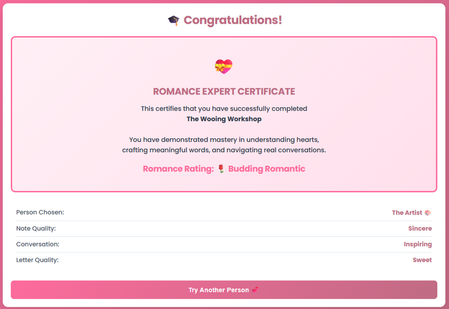
Valentine's Express is an interactive experience where users navigate personality-based scenarios and craft notes and love letters. They choose a personality type, receive personalized feedback, and earn a Romance Expert certificate. This entry doubles as my submission for both the E-Learning Valentine Challenge AND the Code Block Build-a-thon. It was my first time building with code blocks in Rise, and I'm amazed at what's possible. Ready to express your heart? Check it out here! 💕385Views4likes4CommentsRisk Quest: Investigator Training
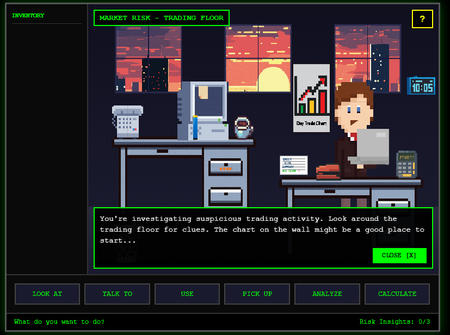
Code Block Experience Inspired by the old point-and-click adventure games, I wanted to build a simulation-style experience that lets learners have fun while actually practicing investigation skills. In this scenario, you step into the role of a newly assigned Risk Investigator trying to figure out why financial projections don’t match real-world returns. Projects like this usually don’t happen. Not because they aren’t valuable, but because they take time, money, and resources that most teams just don’t have. Fast builds are expected. Games are not. So instead of waiting for the perfect conditions, I used Rise Code Blocks, ChatGPT, stock images, and a lot of trial and error to build a playable proof of concept the team could realistically evaluate. The Risk Quest demo puts you directly in the investigation. You explore the environment, pick up and use objects, connect the dots, and report back what you’ve uncovered. If you’re not paying attention, you’ll miss things. That’s intentional. The project is broken into three parts: Risk Quest Demo Play the experience. Be the investigator. Figure out what’s going on. Risk Quest Evolution Walk through how the project evolved from v1 to the current POC. You can see what changed, what stuck, and what ideas didn’t survive contact with reality. Hidden Assets All of the graphics used in the experience and how they were stored and referenced directly in the Code Block as the look and feel evolved. And yes, this whole thing is heavily influenced by nostalgia. Did anyone else play these growing up? Zak McKracken and the Alien Mindbenders, Maniac Mansion, Sam and Max, Indiana Jones and the Fate of Atlantis, and my personal favorite, Monkey Island as Guybrush Threepwood. 😁 Take a look, share feedback, swap a memory or two, and enjoy.578Views11likes3CommentsPaint by Num-Birds: Songbird Identification Tool
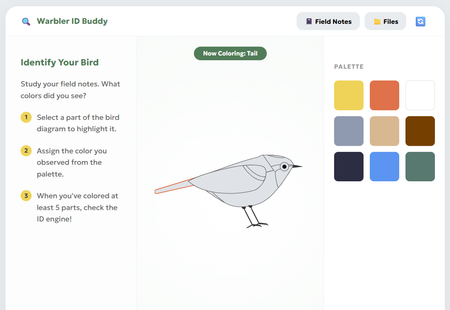
This interaction pushes learners to get curious and creative while identifying some of the most notoriously difficult bird species to spot - warblers! The paint-by-numbers interface paired learning materials (like snapshots, anatomy diagrams, and their own field notes) introduces learners to the fundamentals of bird identification, and allows them to explore this process of visually ID'ing a bird for themselves. Review Here: https://360.articulate.com/review/content/54d099bd-477a As a team with avid birdwatchers, trying to "onboard" people to the hobby always poses a classic blocker: "How do you tell the birds apart?" Though sound, habitat, and other factors play a role, visuals are the first pillar of identification that beginners start to familiarize themselves with. Using Rise's code block, we wanted to create a tool that went beyond flip cards, checklists, and other default interactions. Leveraging HTML/CSS, we created a workshop space that: Breaks down key features to note for ID'ing through an interactive diagram Offers as much or as little support they may need in the form of the snapshots, diagrams, and facts in the "Files" Provides a challenge to apply what they've learned by identifying the "Field Notes" recordings To build this block, we used a mix of vibe-coding and human code expertise! Once we had refined our idea on our own, Gemini was enlisted to help create the basic UI and functions. The functionality was refined and adjusted many times for user ease and clarity. Finally, we looped human experts back in to polish the code, refine the diagram, and squash any stubborn bugs. It was a whirlwind learning experience! Some takeaways: Having the AI refine snippets of the code ensured overall block integrity. We made the mistake at the start of having Gemini spit out a whole new HTML file to adjust minor pieces; we found it changed things that we hadn't asked it to, and actually got "lazy", condensing body text and dressing down UI elements increasingly with each iteration Knowing when to use AI, and when to call in a human expert was our superpower. Gemini deeply, SERIOUSLY struggled trying to create an SVG of a bird. So, we took the monstrosity it outputted and edited the code ourselves to create an image we were happy with! We also enlisted our senior developer to jump in and fix some serious coding errors that had made the block totally un-playable. Not all AI's are made equal: Canva's AI was very promising for vibe-coding at first, but Gemini ultimately became our tool of choice as it provided the most accurate and useful responses. We chose this activity because as bird lovers, we know that warblers in particular have such subtle differences - a black eye ring on one bird might make it a totally different species from the next! The ability to paint and visually describe these tiny differences seemed like the perfect learning opportunity for this challenge (and get our other coworkers on board with birding)! Let us know what you think! Were you able to paint a perfect match? Created by Aamir Aman, Tal Castillo, and Ryan Young.4.2KViews37likes15Comments