buttons
52 TopicsWeekly Challenge Submission: "Screaming Service"
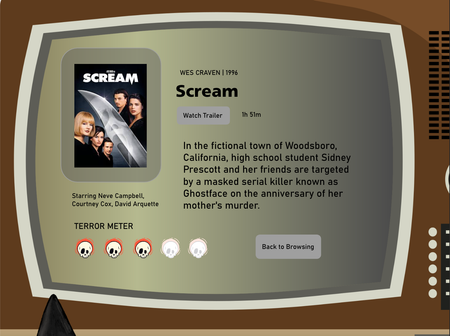
Cross-posting my weekly challenge submission here for wider viewing—enjoy! -- In a nod to this week's challenge title, I created a just-for-fun Halloween scenario in Storyline where you browse a "Screaming Service" of Halloween movies and try to pick a movie that all three of your guests will enjoy based on their specific preferences. In this build, I wanted to focus on up-leveling my visuals from my last challenge submission, cementing my skills with True/False variables, and making greater use of Hover states and slide layers. Visually, I wanted to give this a cozy, autumnal 90's feeling. I added a few video-game-like elements, too, like the transparent pulsing green ovals to "select" objects. I also asked TomKuhlmann to generate character packs for me so that I could have this scenario feature community team staff that are probably familiar to you — Tom, AlyssaGomez, and Katie-Jordan. There is one particular slide of the three of them I quite enjoy 🤣 I used two instances of True/False variables in this build to allow the learner to explore different decisions in any order. On the initial browsing TV slide, the learner can explore all six movies in any order, but their guests don't "arrive" until they've looked at every movie (I set the "Knock Knock" layer to reveal after all six variables became true). I like how this gives a sense of the scenario unfolding "naturally." I also used True/False variables to let the learner ask Tom, Alyssa, and Katie about their movie preferences in any order before asking the learner to suggest a movie. I had a really fun time building this and hope that if you take a look, you find it atmospheric and enjoyable. Looking forward to taking a peek at some of my fellow challengers work. You can check out the scenario here.176Views1like6Comments“Are You Sure?” in E-Learning #555
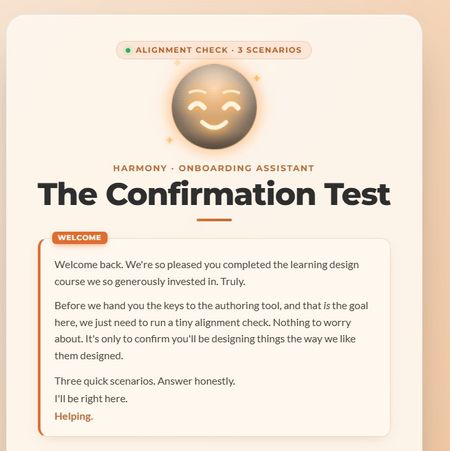
This week, I wanted to lean into the spirit of the confirmation prompt, that moment of pause, of reconsideration, and ask: what if that pause wasn't entirely on your side? The scenario: you're an internal team member who's just come back from a learning design course. You have the master learning design authoring tool. Before you're allowed near the authoring tool, the org's AI guide HARMONY needs to run a quick "Confirmation Test." Three scenarios. Shouldn't take long. HARMONY is very helpful. The "Are you sure?" mechanic does something a little different here. I'll leave it at that. 🙂 A few craft notes for anyone interested in the build: The confirmation prompt UX is deliberately asymmetric; the buttons don't behave the same way depending on which answer you're leaning toward HARMONY has two states that shift based on your choices throughout Three different endings based on your answer tally The fake "analysis" stage has a silent jury. You'll see. I have a lot of fun with Claude Design, Code and all things Claude Would love to know which ending you hit, and whether any of the scenarios felt a little too close to home. 👀 Are you a conformist or a rebel? Find out here Confirmation Test Let me know how many little "interesting" interactions you spot Thanks to DavidAnderson and the Articulate 360 Account Management team for the prompt; this one was a lot of fun. #ElearningChallenge369Views3likes4CommentsHow to Create Default Buttons and Shapes
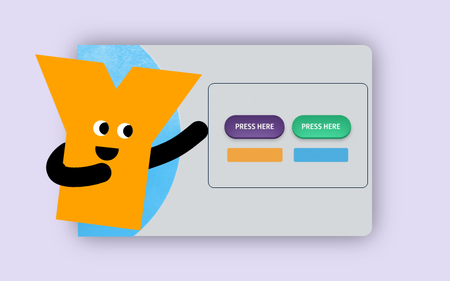
This week's tip comes from John_Moore_YL at our certified training partner, Yukon Learning. Did you know that your shapes don't have to be the standard Accent 1 color? And buttons don't have to be the standard neon blue? Setting default shapes and buttons can streamline your workflow and enhance consistency throughout your Storyline courses. In this video, we'll show you how to change your project's default shapes and buttons. We'll show you how to: Add shapes and buttons Change the default fill and outline colors Resources: Yukon Learning YouTube Channel Sign Up for Facilitated Certified Training203Views1like0CommentsADDIE SPRINT
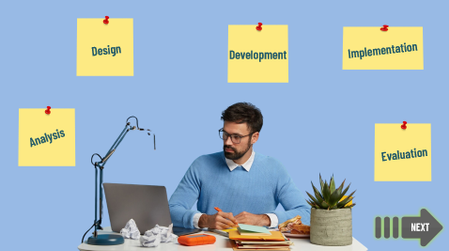
This 5‑minute microlearning module explains the ADDIE model for building effective e‑learning. The course uses audio‑visual storytelling, and an interactive drag‑and‑drop activity to help learners quickly understand how Analyze, Design, Develop, Implement, and Evaluate work together in real‑world e‑learning projects. Built in Articulate Storyline 360, the module focuses on clarity, engagement, and practical application—perfect for beginners and busy professionals. Review Here: https://360.articulate.com/review/content/44d1a951-be35-45ec-bb0d-21a79c60964e/review682Views2likes0CommentsUI Concept: Military Tank Encyclopedia – Adaptive Navigation Design
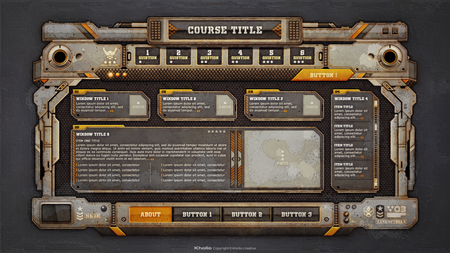
Hi everyone! This is my first post here. I’ve been following this amazing community and the inspiring work shared here for a long time, so I’m thrilled to finally join in and share something of my own for feedback. I’m currently in the pre-development phase of a comprehensive Military Tank Encyclopedia. Before beginning the technical build in Articulate Storyline, I’ve designed this high-fidelity mockup to balance a high volume of data with a clear user experience: The Logic: Managing Cognitive Load in High-Density UI 1. Adaptive Learning Path: The Question Bar (1–6) at the top serves as a pre-evaluation. Based on the results, the interface dynamically unlocks one of three "clearance levels," determining the technical depth of the content available to the user. 2. Information Hierarchy & Visual Tracking: To prevent cognitive overload, the UI uses a dual-track logic: • The Center/Main Frame: Dedicated to the specific tank model and its primary variable data. • Side Display Windows (Circular/Rectangular): These are strategically placed to show general, secondary-level information that follows a separate, global path. By decoupling this from the main model-specific content, I aim to maintain visual stability, reduce eye-tracking fatigue, and provide a clear lane for complementary general knowledge. Current State: All text, titles, and button labels are currently placeholders while the final technical content is being mapped to the structure. Feedback Requested: 1. Given the high information density, does the separation of "Global Data" (side windows) and "Variable Data" (center) feel like an effective way to manage cognitive load? 2. Does the visual hierarchy clearly distinguish between the assessment area and the encyclopedia navigation? Thank you for your welcome and for your objective feedback!502Views2likes0CommentsWorkplace Violence and Harassment – Game-Based Scenario
One of our recent projects involved developed a game-based, scenario-driven Custom eLearning Solution focused on Workplace Violence and Harassment Training. As part of our broader corporate training solutions and digital learning services, the goal was to move beyond traditional click-through compliance courses and create a learning experience where employees actively practice real-world decision-making. What we built: A scenario-driven course with 1–4 progressive levels Each level presents realistic workplace situations that require learner judgment Learners complete a knowledge check or quiz at the end of each level Successful completion unlocks a badge, reinforcing motivation and progression Why this project matters: Rather than relying on a traditional, click-through compliance approach, we designed this eLearning course to help learners practice real-world decision-making in a safe environment, supporting better recognition, prevention and response to workplace violence and harassment. Behind the scenes: Branching scenarios were designed to encourage reflection, not just right-or-wrong answers Feedback carefully crafted to explain why a response is appropriate Game mechanics were applied thoughtfully to maintain the seriousness of the topic What this project reinforced for us: When designed with intent, gamification can enhance engagement and retention, even for sensitive compliance topics. Tools used: Articulate Storyline 360 for course development Vyond for video creation Learning outcome: Participants will be able to identify, prevent and appropriately respond to workplace violence and harassment situations through practical, scenario-based decision-making. Explore the course: Click the link below to view the course. https://www.swiftelearningservices.com/our-portfolio/game-based-scenario-sample/story.html We welcome your feedback, questions and suggestions, especially around scenario design, feedback strategies and gamification for sensitive compliance topics.2.2KViews5likes6Comments5-Minute Makeovers for E-Learning #532
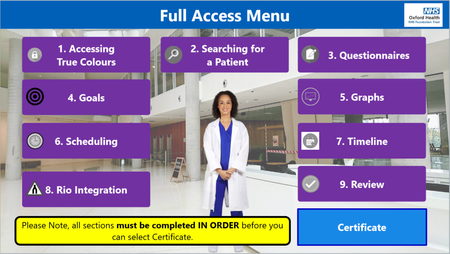
We updated our menu slides. Originally the buttons just ticked off to show that each section was completed (we used variables at the end of each section that ticked the buttons off on the menu slide). We updated the menu slides to have badges instead that changed from black to coloured badges (using variables at the end of each section that ticked the buttons off on the menu slide). This was to link in with the gamification aspect for staff to collect the badges throughout the course for each section.396Views2likes0CommentsStoryline Radial Menu
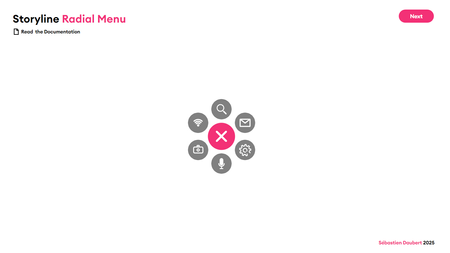
Hey community! 👋 I'm sharing a script that transforms your Storyline buttons into an animated circular menu with a cascade effect. All elements remain native Storyline objects, so they're easy to customize design-wise. Add as many icons as you want to the list, the distribution is automatic. All settings (radius, angles, duration, easing...) are at the top of the script, no need to dig through the code. Have fun and try different parameters! Storyline circular menu 1.3 | Review 360679Views4likes1CommentThe Agency Algorithm
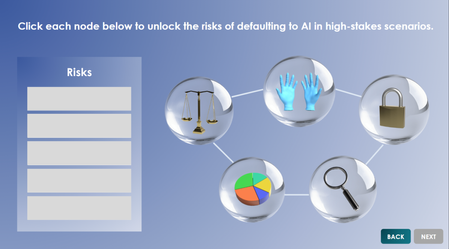
Hi all! With an academic background in both Ethics and Instructional Design, I’ve always believed learning can immerse us in thought experiments that challenge assumptions and sharpen critical thinking. The Agency Algorithm explores how AI systems leveraged in contexts like medical triage, surveillance, and beyond can reshape (and even diminish) human agency. By placing learners in these complex scenarios, my project aims to highlight the ethical stakes of algorithmic decision-making and the risks of prioritizing efficiency over empathy. I wanted to push the boundaries of eLearning aesthetics to create a modern, engaging course that asks big questions about our agency in a time of rapidly advancing technology. This project won Best Soft Skills at DevLearn last month, and I am excited to continue building sleek, mind-bending courses to get learners thinking critically! You can check it out here. I'd love to get some feedback so I can continue building on my skills as a designer and developer!495Views2likes6Comments