advice
2522 TopicsAre We Designing for Learning or Just Adding More Clicks? 🤔
I've been thinking a lot lately about how we approach interactivity in e-learning, especially with all the amazing tools and features available to us in Rise and Storyline. As instructional designers, we have so many creative ways to engage learners, but I sometimes wonder if we're making things interactive because they genuinely support learning or simply because we can. For me, the goal has always been to move beyond presenting information and create experiences that help learners actually apply what they've learned. Sometimes that means a scenario, a decision-making activity, or an opportunity to practice (I would love to hear ideas about how you do this one). I'd love to hear how others approach this. What's your personal rule of thumb for deciding whether an interaction truly adds value to a learning experience? And even better, have you ever removed or simplified an interaction and found that the learning experience actually improved? I'd love to hear your experiences, examples, and lessons learned. One of my favorite things about this community is how much we can learn from each other's approaches!33Views0likes4CommentsHow can I start a motion path where it ended in a previous slide?
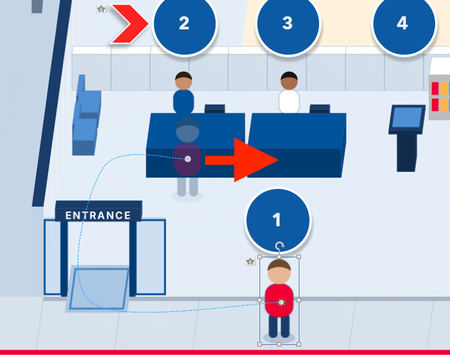
I created a curved motion path for an icon in slide one. In slide two, I want that curved motion path to be a straight-line motion path, starting where the curved motion path ended in the previous slide. How do I accomplish this?Solved103Views0likes12CommentsYoutube videos not playing inside the SCORM
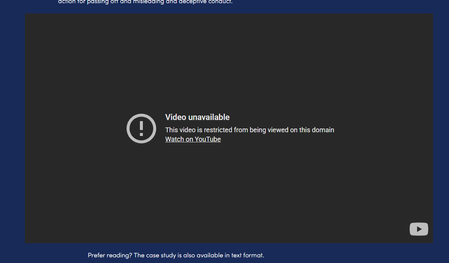
Hi, I am reexporting a SCORM file from January after making a small text change, only now none of my videos work. I get this message... Videos are visible on the published page but when we click to play we get video unavailable error (as shown) and then the video plays in another tab. Export settings tried both: all export settings LMS: Go1 Youtube videos tried: both videos from our youtube channel and a random video from youtube Method: tried both embed and code I don't believe it is a YouTube issue because videos in my previous SCORM file still work fine. Please help with a solution.81Views0likes4CommentsRecent SCORM issues with Canvas
Wanted to check in to see if anyone else has had this issue. We use two different LMS systems: Canvas as one and Absorb as the other. I have had no recent issues with Absorb but I have recently run into an issue hitting an error when trying to upload those very same SCORMs into Canvas. Again they work in Absorb but are not accepted in Canvas. Is there something about the most recent SCORMs with the new AI additions that is not being received properly by Canvas? Any insights would be helpful. Thank you.70Views0likes3CommentsKeyboard accessible drag-and-drop help
I've created a keyboard accessible drag-and-drop exercise in Storyline using these instructions which has worked great for both users who click & drag with a mouse and users who select with a keyboard. My challenge is when I try to add animation so incorrect responses are returned to their original position while correct responses remain in the drop field. I used these instructions to make that happen. And it works but only for users who click & drag with a mouse. Any ideas on how I could return incorrect drag-and-drop answers so it works for those using a keyboard as well?18Views0likes1CommentStoryline SCORM: Unexpected Font Changes & Square Boxes
We have a few separate Storyline SCORM modules that were built using the same layout/template – they were all quizzes/short assessments and uploaded into the same course in our platform, Docebo. After uploading the file, we noticed an issue where the text in one of the modules would render in a different font and some of the characters would appear as square boxes. On some slides, the feedback layer was also visible before the answer was submitted. We tested across multiple browsers, including private/incognito sessions, and the issue persisted. My colleague republished and reuploaded the file and the issue resolved. However, after later making changes to a one of the other modules built from the same template and overwriting the existing SCORM package, the issue reappeared. Has anyone encountered similar behavior?27Views0likes1CommentMultiple languages in one SCORM
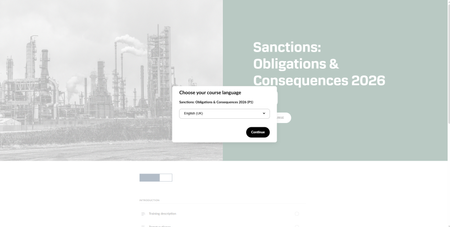
Hi, I can see that there is now an option to publish multiple languages in one SCORM package. This is amazing! However, there is one issue: once you select a language, you cannot change it. Is there a way to refresh or restart the training so that the user can select a different language? Many thanks in advance! :)36Views0likes2CommentsProblems with a quiz!
I have downloaded a quiz/game that I’m having some trouble with. There is a help function, but unfortunately, I can’t get it to work. I want to change the number of levels from 5 to 2—I believe I’ve sorted that out—but I also want to adjust the time allowed to complete the task, and I haven’t been able to figure that part out. So, is there a clever person out there who can solve this for me, or explain exactly how I should go about it?Solved51Views0likes5CommentsAI and decreasing Quality Assurance review time and found errors
Hello, I am a QA Coordinator and have been asked to evaluate the potential impact of incorporating an AI agent into our Articulate 360 QA process. I would like to identify which tools or capabilities within Nova and Frontline could support and enhance quality assurance including decreasing time and documentation of comments. Specifically, I’m interested in capabilities that can assist with: Spelling, grammar, and consistency Specialized spelling and use of industry-specific terminology Font, layout, and design consistency Closed captions and caption-content accuracy Alignment of course content and assessments with stated learning objectives Verification of working hyperlinks Navigation and functionality Quiz functionality and completion requirements Identification of other potential quality or accessibility issues The goal is to understand where AI could supplement our existing QA process, improve consistency and efficiency, and identify issues that may still require human review. THANK YOU!26Views0likes2CommentsRemove Rise microlearning restart button
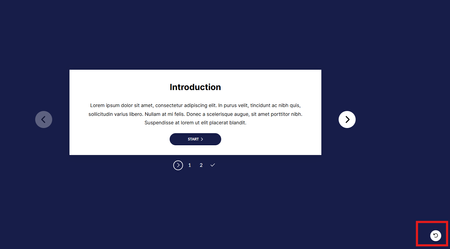
Hello I have a Rise microlearning activity but it's just one block - a process. That's all I need, which means the restart icon (curved arrow) that automatically appears in the bottom right of the screen doesn't do anything (there are no other lessons or blocks to navigate to). Therefore, I want to remove it as to an outsider, it just looks like a button that doesn't work. (screenshot attached). Does anyone know how to do this, presumably by editing the CSS please? I found an answer from a few years ago but it's all changed since then so I can't follow those instructions. Any help is much appreciated! Thanks, NishaSolved524Views2likes10Comments